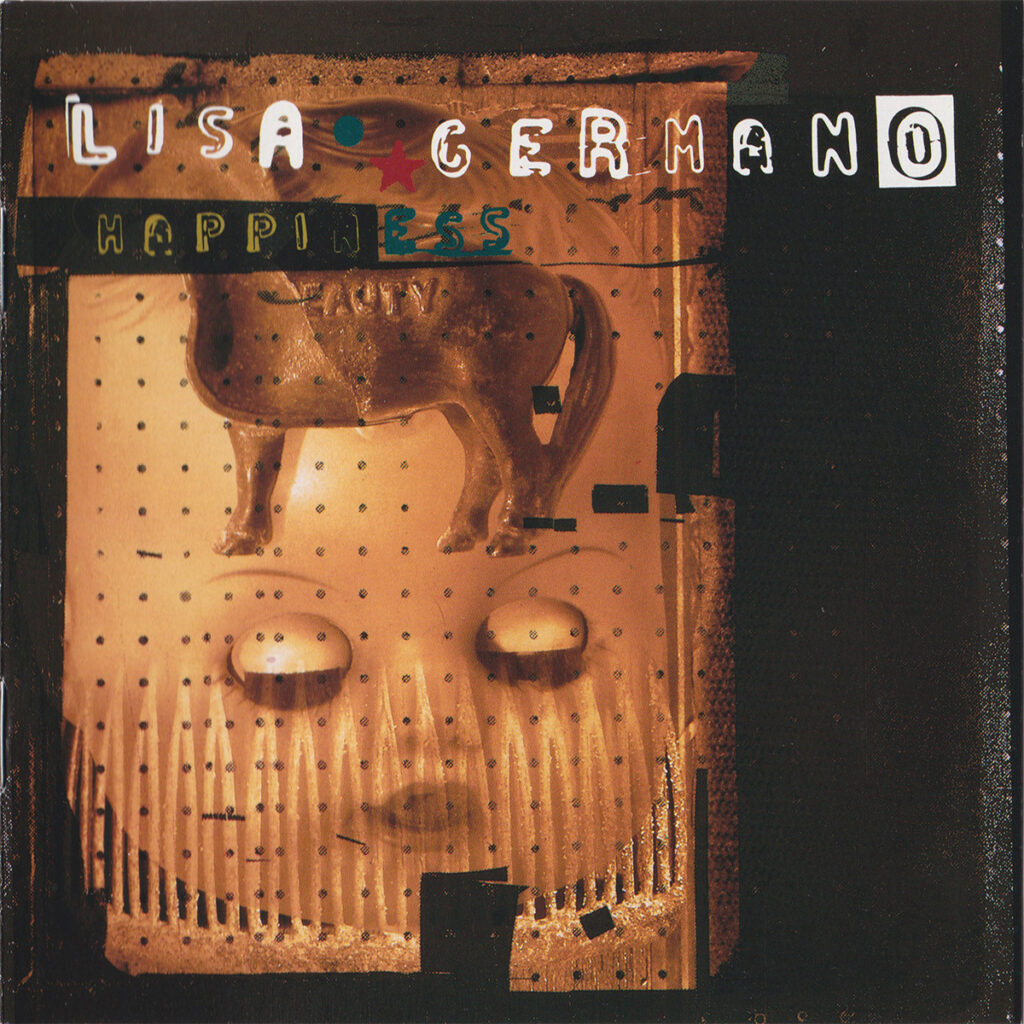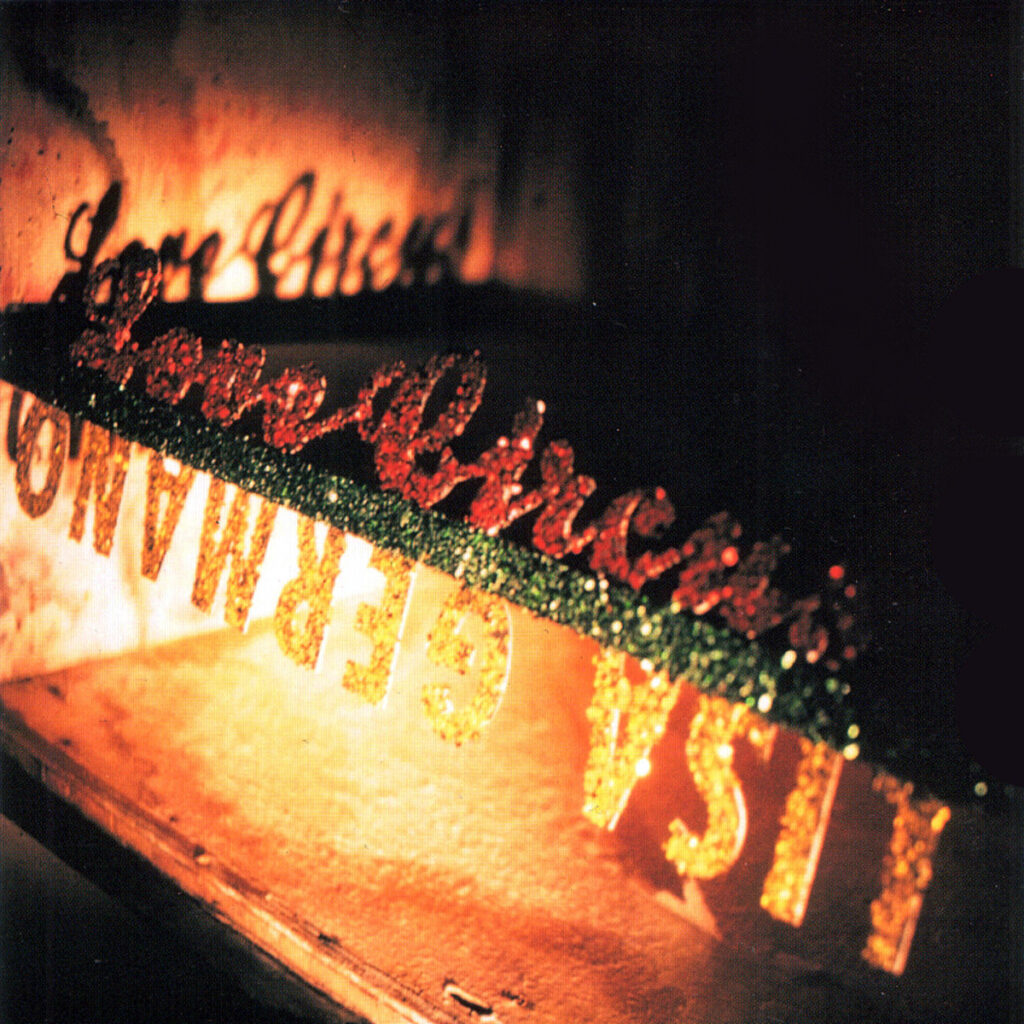




Now that you think you’re happy enough… time to explore sex and realize that it’s a horrible surprise how people take advantage of you and how you let them.
Released on October 25, 1994, Geek the Girl is Lisa Germano’s third studio album and the record most often cited as her creative and emotional zenith. Arriving just six months after 4AD’s re-release of Happiness, it announced an artist who had fully shed the commercial scaffolding of her Capitol years and arrived somewhere entirely her own.
Where Happiness had balanced darkness with a certain melodic accessibility, Geek the Girl made no such concessions. Recorded almost entirely at Germano’s home in Bloomington, Indiana on an ADAT machine—with Germano playing nearly every instrument herself—the album carries an intimacy so unguarded it can feel like an intrusion. Its subject is “the geek”: a character navigating adolescent desire, sexual violence, fear, and the quiet humiliations of being dismissed. The album doesn’t arc toward empowerment or resolution. It documents a condition.
In a year that produced Hole’s Live Through This and Liz Phair’s Exile in Guyville, Geek the Girl arrived at the center of the conversation about women and rock—and was, for reasons the album itself helps explain, overlooked by it. It has spent the three decades since accumulating the kind of slow, word-of-mouth reputation that the mainstream briefly failed to give it.
Background
Geek the Girl grew directly out of the uncertainty following Germano’s departure from Capitol Records. Having reclaimed the master tapes for Happiness and re-released it through 4AD in April 1994—just six months before Geek the Girl would arrive—she found herself in an unusual creative space: signed to a label, yet without the pressure of commercial expectation or label oversight that had shadowed her Capitol tenure. In interviews from the period, she was candid about the liberating effect.
“I was between labels, and I started writing without even thinking of making a record. When you don’t think anyone will hear your stuff, you really get down to some deeper stuff.”
Lisa Germano
Q Magazine (January 1995)
Ivo Watts-Russell had signed her to 4AD after seeing her perform at the Troubadour in Los Angeles, drawn to the stark intimacy of her solo work. That trust extended fully to Geek the Girl—where Capitol had struggled to position Germano within recognizable commercial frameworks, 4AD gave her room to make exactly the record she was capable of making.
What emerged surprised even Germano. “I thought it was going to be a record about silly situations that girls got into,” she told Westword in a 1994 interview, “but the songs ended up being a lot more serious.” The record she describes as having originally planned dissolved as the writing progressed, replaced by something rawer, more inward, and ultimately more consequential.
Themes
Geek the Girl is framed, loosely, as a concept album. Germano described its subject as a character in arrested development: “Geek the Girl is about this person who’s not growing and is real stuck.” The liner notes add the telling coda: “Now that you think you’re happy enough… time to explore sex and realize that it’s a horrible surprise how people take advantage of you and how you let them.” It’s a bildungsroman built not around triumph but around the failure of innocence—the gap between how the world tells a young woman she can navigate it and how it actually unfolds.
The album’s emotional architecture is deliberately non-cathartic. Where so much of the feminist-inflected rock arriving in the same year offered righteous anger, Geek the Girl offered something harder to metabolize: the paralysis, compliance, and shame that follow when the idealized self meets the reality of powerlessness. “Dumb as I am, I know this,” opener “My Secret Reason” begins, hedging every observation with self-deprecation, establishing the album’s voice immediately.
The conceptual spine is reinforced by one of the album’s most disarming structural choices: the recurring presence of a Sicilian folk tune called “Frascilita,” which Germano included as a kind of “comic relief” from the record’s darkness. In practice the effect is the opposite—the chirpy, silent-film-era ditty arrives between songs with such abruptness that it functions more like a horror-movie jump cut, its incongruity amplifying the unease rather than breaking it. Its provenance is genuinely mysterious; prior to Geek the Girl, no documented trace of the tune exists.
At the album’s center sits the sequence of “Cry Wolf” and “…A Psychopath,” the emotional hinge around which everything else pivots. “Cry Wolf”—co-written with Jay Joyce and in part inspired, per Germano’s interviews, by the Mike Tyson rape conviction—is a spare, chilling account of date rape told without accusation, its refrain “they say she got just what she wanted” delivered in a tone that refuses to editorialize, allowing the cruelty of the sentiment to land exactly as it would in life. “…A Psychopath” follows and escalates everything further. Written from Germano’s own experience of being stalked for years—by a man who found her address, called her personal number, and on one occasion got through security at a Mellencamp concert—the song builds its account of sustained fear over a sparse arrangement of violin, guitar, and synth. At its center is a real recording: a 911 call of a woman named Karen, obtained with permission from a rape crisis center in Houston, in which Karen confronts an intruder in her home and escalates from fear to screaming before the line goes dead. Germano obtained the recording from a documentary on violence, and nearly left it off the record. “A lot of people, when you’re being stalked or you’re being harassed by a man, they don’t take it seriously,” she explained. “You’re not scared that he’s just going to hang around your house; you’re afraid that he’s going to get in your house and you’re going to get raped like she got raped at the end of that call. Her voice is so hysterical, and I want people to know: that’s what the fear is.”
The album’s back half navigates toward something not quite redemptive but at least less airless. “Cancer of Everything,” “A Guy Like You,” and “…Of Love and Colors” map a gradual partial resurfacing, and closing track “Stars”—noticeably more melodic and outward-facing than anything preceding it—ends the album at a crossroads rather than a conclusion, leaving the protagonist’s future genuinely unresolved.
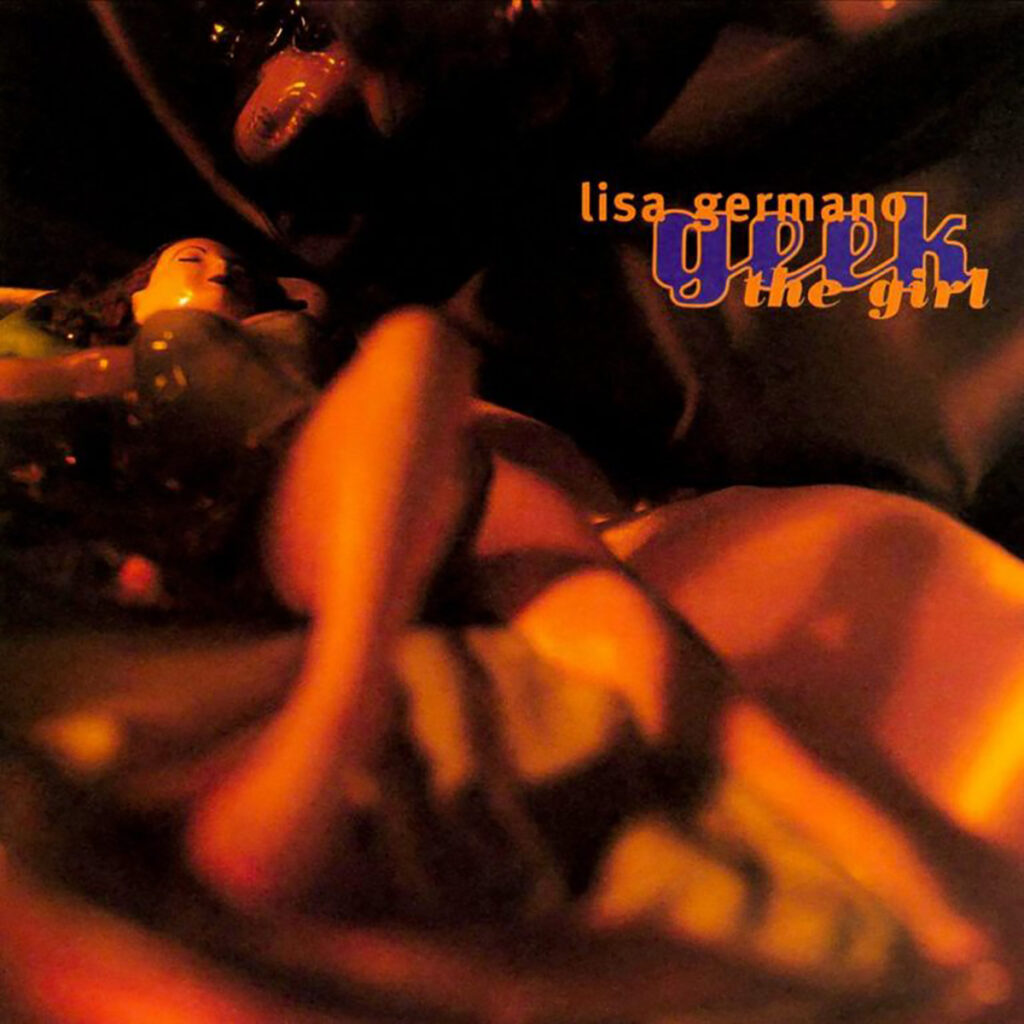
Released: 1994
Label: 4AD
Catalogue No: 9 45758-2
Format: CD, Cassette
Country: USA
Availability: Moderate
| No. | Title | Length |
|---|---|---|
| 1 | My Secret Reason | 4:31 |
| 2 | Trouble | 2:20 |
| 3 | Geek the Girl | 3:40 |
| 4 | Just Geek | 2:43 |
| 5 | Cry Wolf | 4:59 |
| 6 | …A Psychopath | 4:36 |
| 7 | Sexy Little Girl Princess | 3:38 |
| 8 | Phantom Love | 3:21 |
| 9 | Cancer of Everything | 4:00 |
| 10 | A Guy Like You | 3:18 |
| 11 | …Of Love and Colors | 3:54 |
| 12 | Stars | 2:34 |
The recording process was almost entirely self-directed. Most of the album was tracked at Germano’s home in Bloomington, Indiana, using an ADAT machine, with Germano playing nearly every instrument herself. This solo home-recording approach was not a workaround but a deliberate method—the demo-like quality that results is intrinsic to the album’s effect, the sonic equivalent of overhearing something private.
Four tracks—”Geek the Girl,” “Cry Wolf,” “Cancer of Everything,” and “Stars”—were later remixed with the help of co-producer Malcolm Burn, with drummer Kenny Aronoff added on those tracks. This additional work took place at Echo Park Studio in Bloomington, Indiana, with Mark Hood, Pat Keating, and Ron Black serving as assistant engineers. The album was mastered by Greg Calbi at Masterdisk.
Malcolm Burn’s contributions extended beyond those four tracks: he co-wrote “Just Geek” and “Sexy Little Girl Princess” with Germano, and played drums, guitar, dulcimer, and piano on both. Jay Joyce, who had worked with Germano on the Happiness sessions, co-wrote “Cry Wolf.” Otherwise, all compositions are Germano’s alone.
Packaging & Design
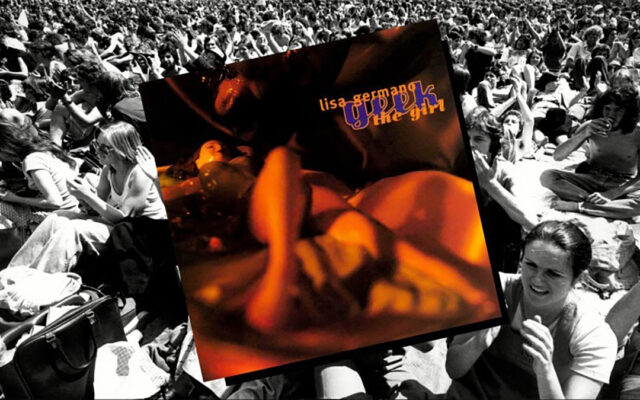
Art direction and design for the original 1994 release was handled by Paul McMenamin at V23, the design studio led by Vaughan Oliver that served as 4AD’s primary visual identity throughout the late 1980s and 1990s. Photography was by Dominic Davies, whose images—centered on a porcelain doll—gave the album its distinctive visual language: fragile, uncanny, the doll’s blank features functioning as a projection surface for the album’s themes of innocence and its dissolution.
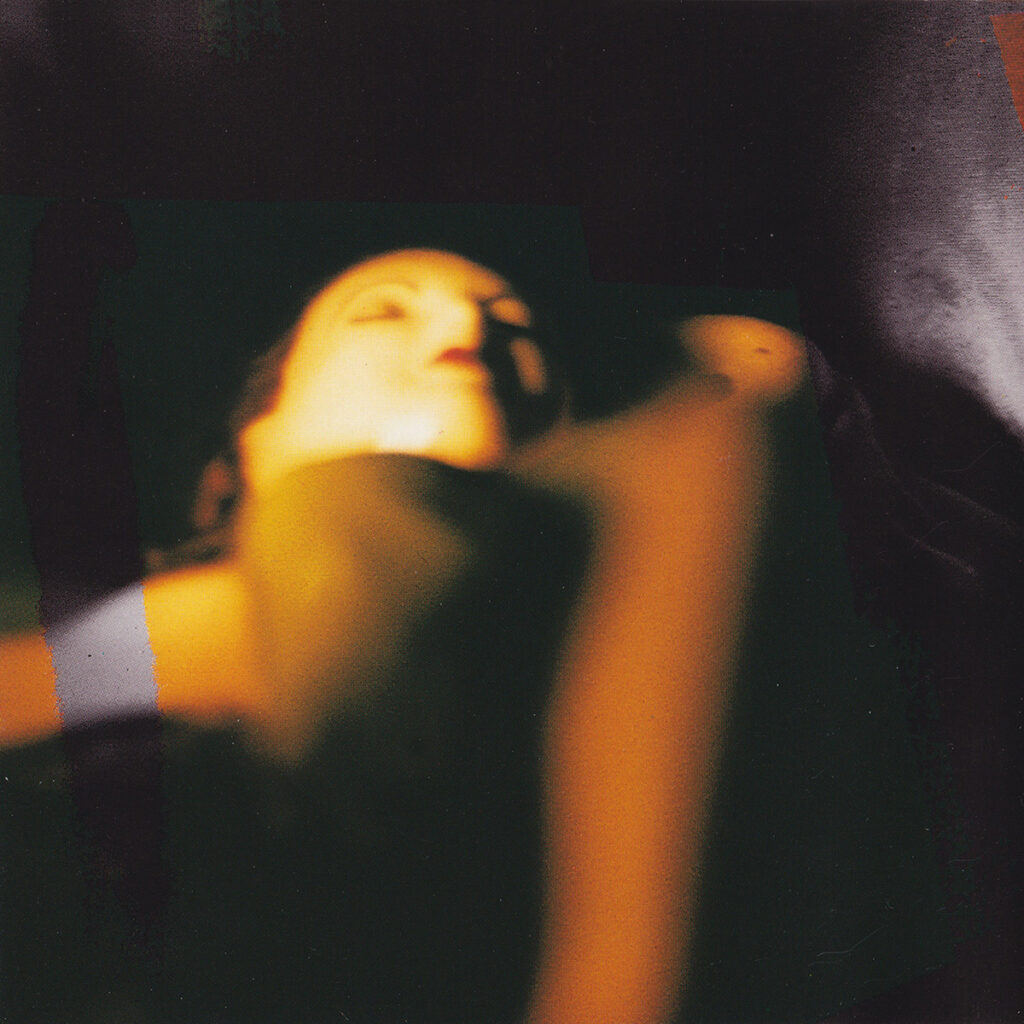
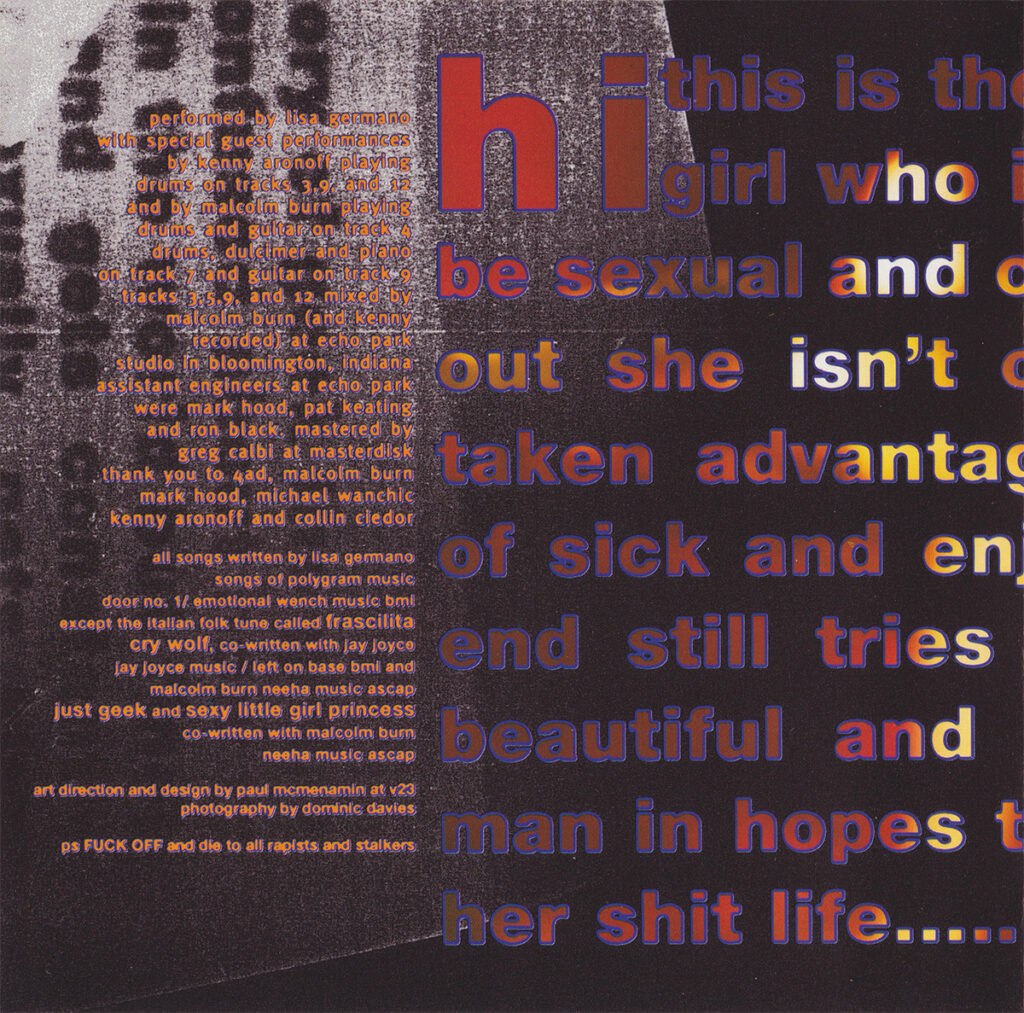
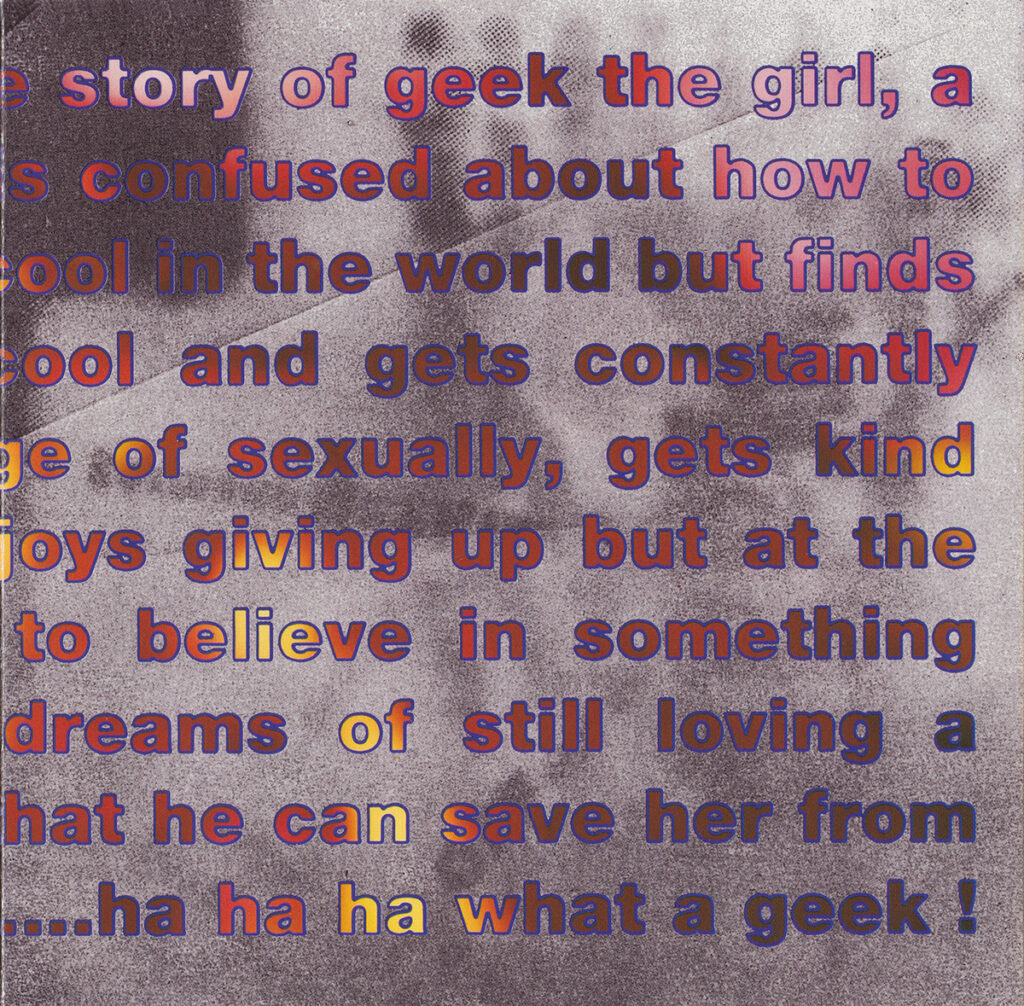
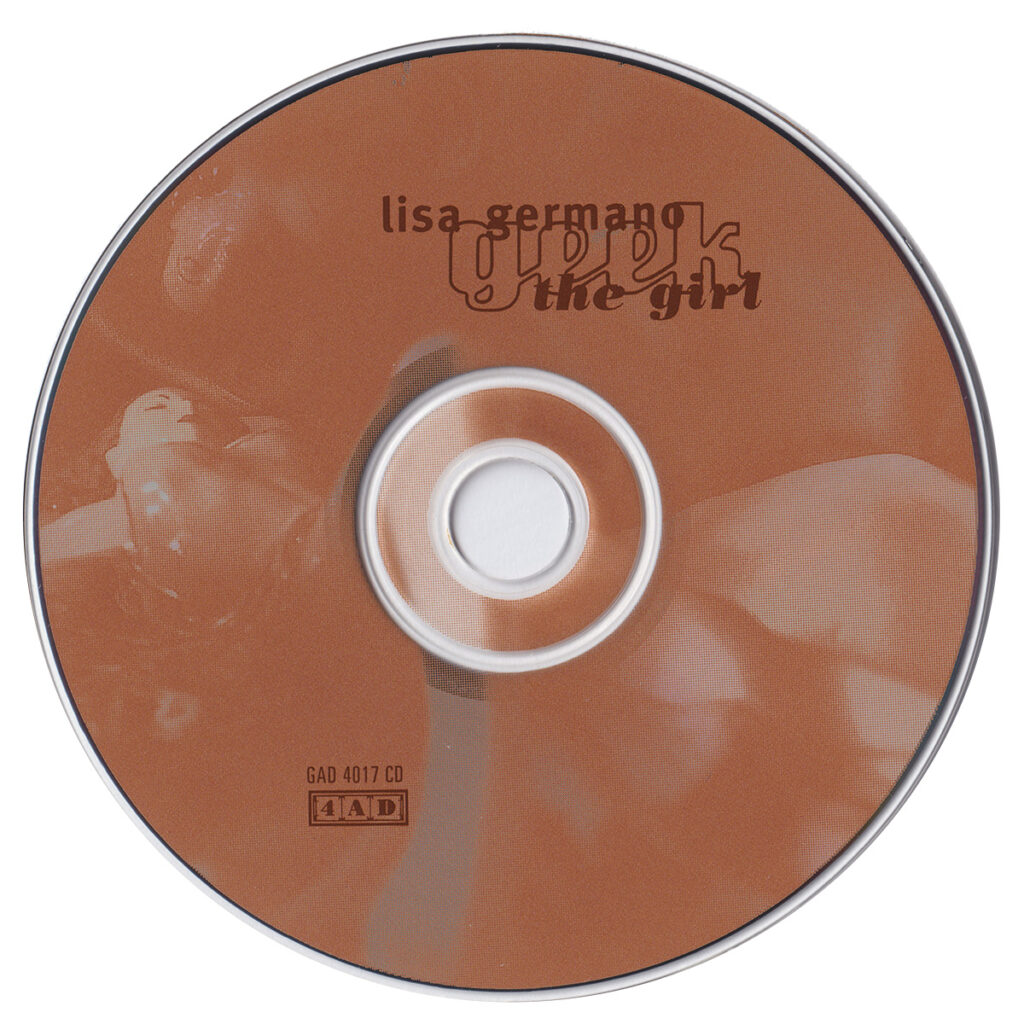
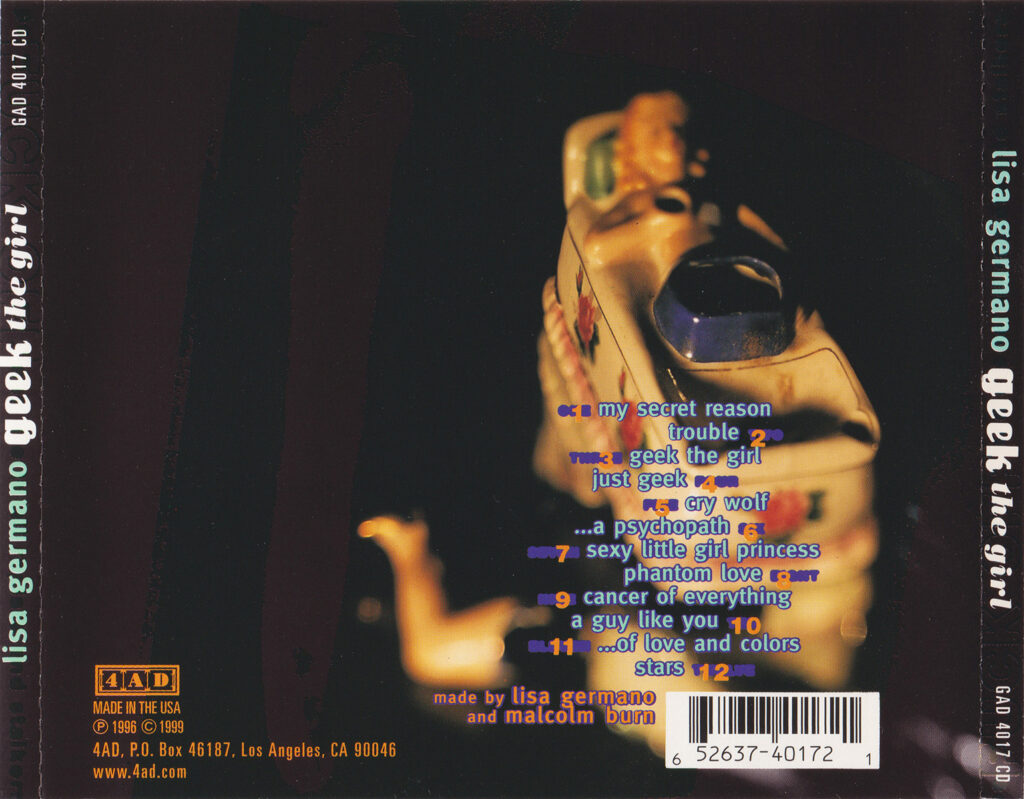
The liner notes close with the dedication: “fuck off and die to all rapists and stalkers”—a note that encapsulates the album’s refusal to be merely confessional. The tone is not just vulnerable; it’s angry, and the anger is pointed.
For 2025’s 30th Anniversary Special Edition, Chris Bigg of V23 returned to Davies’ original porcelain doll cover shoot to design the new packaging, creating a visual continuity between the original release and its reissue.
Released: 1994
Label: 4AD
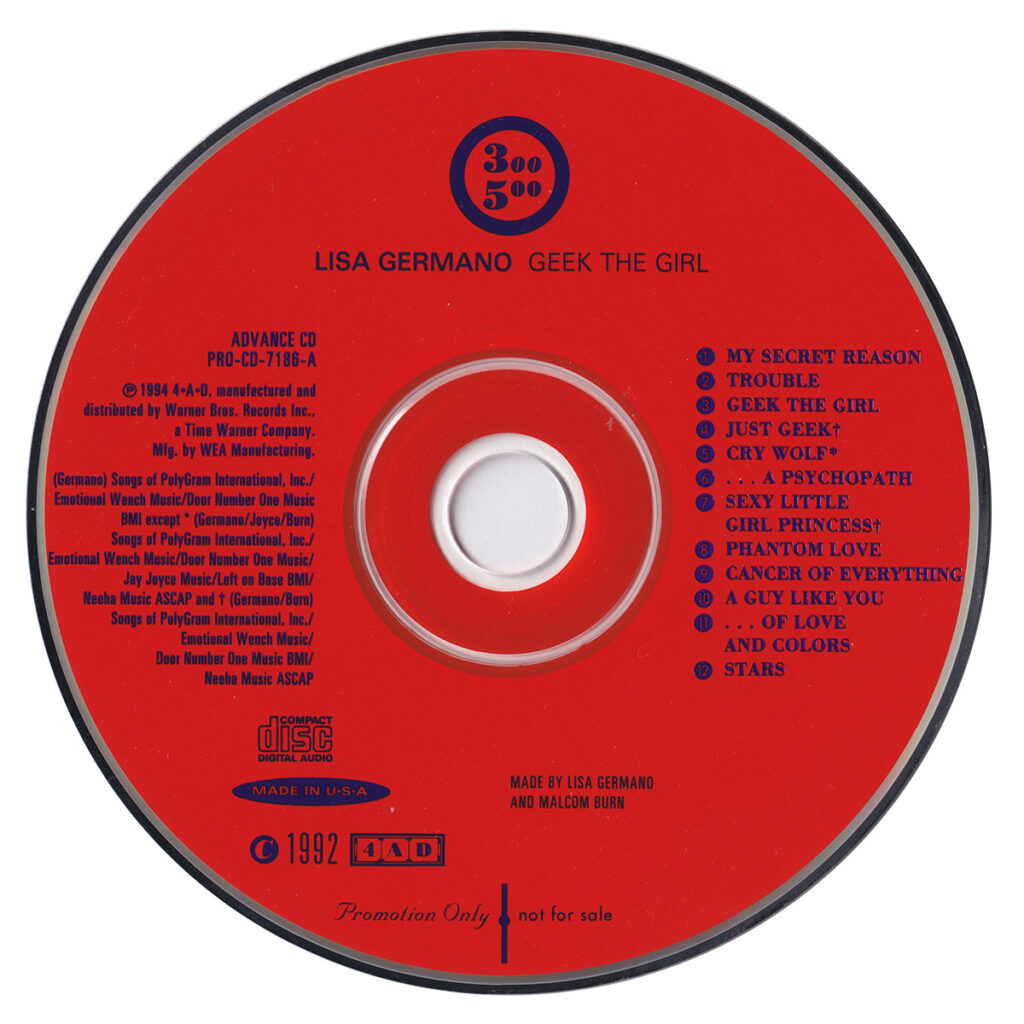
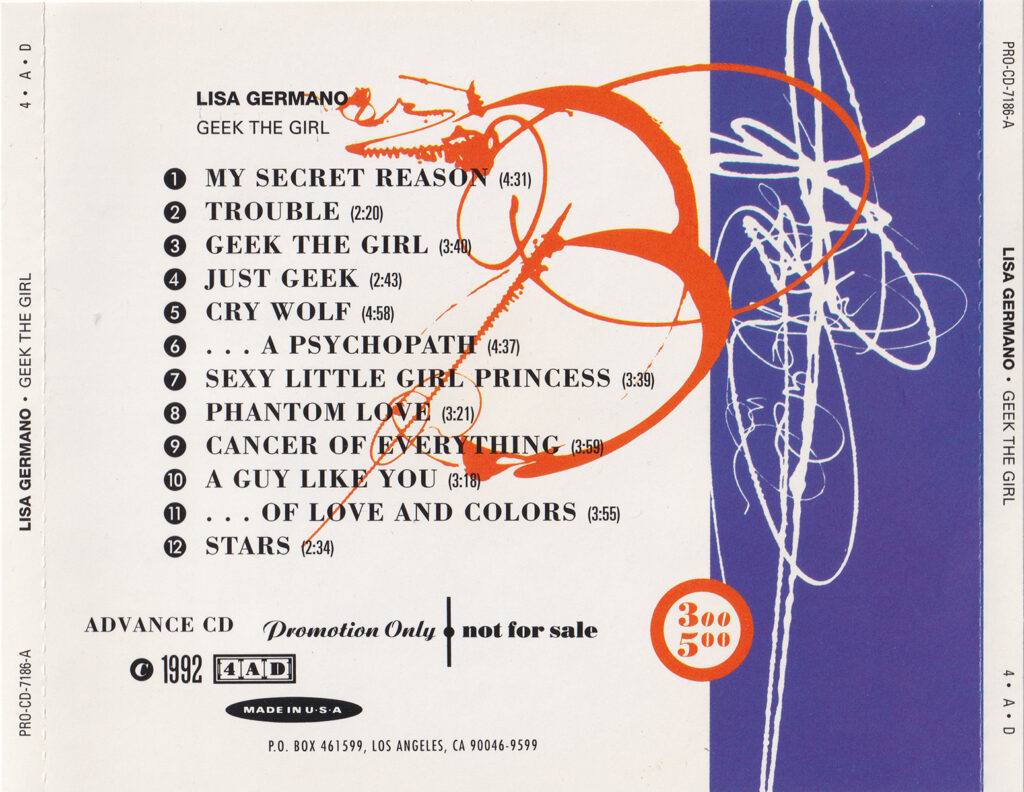
Catalogue No: PRO-CD-7186-A
Format: CD
Country: US
Availability: Rare
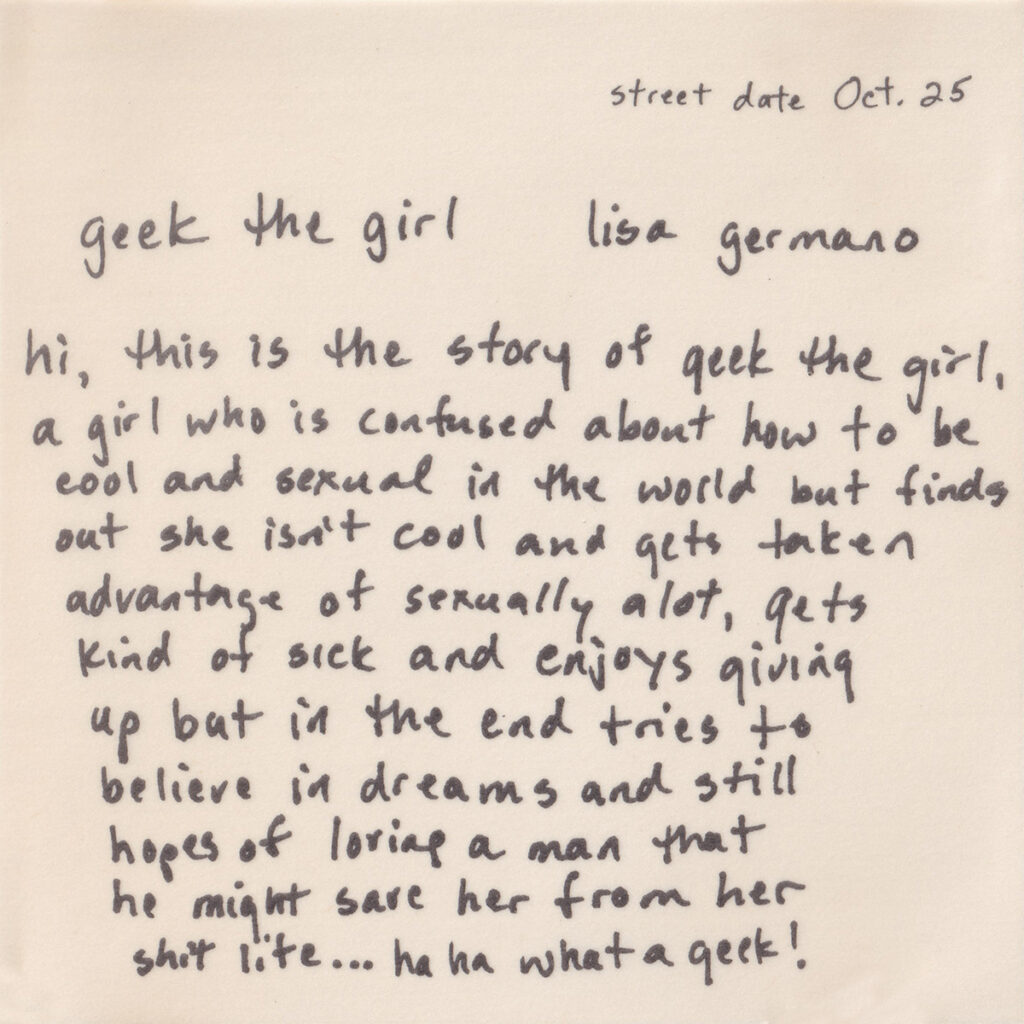
Prior to its official release, advance copies of Geek the Girl were sent out to journalists for press coverage. Some of these earlier promotional releases featured a cover that contained Lisa’s handwritten note on the album’s theme with the street date listed.
Additional Versions
| Label | Format | Catalog No. | Country | Year | |
|---|---|---|---|---|---|
 | 4AD | CD | 9 45758-2 | US | 1994 |
| Virgin | CD | 7243 8 40038 2 1 | France | 1994 |
| 4AD | CD | 76974 2032-2 | Canada | 1994 |
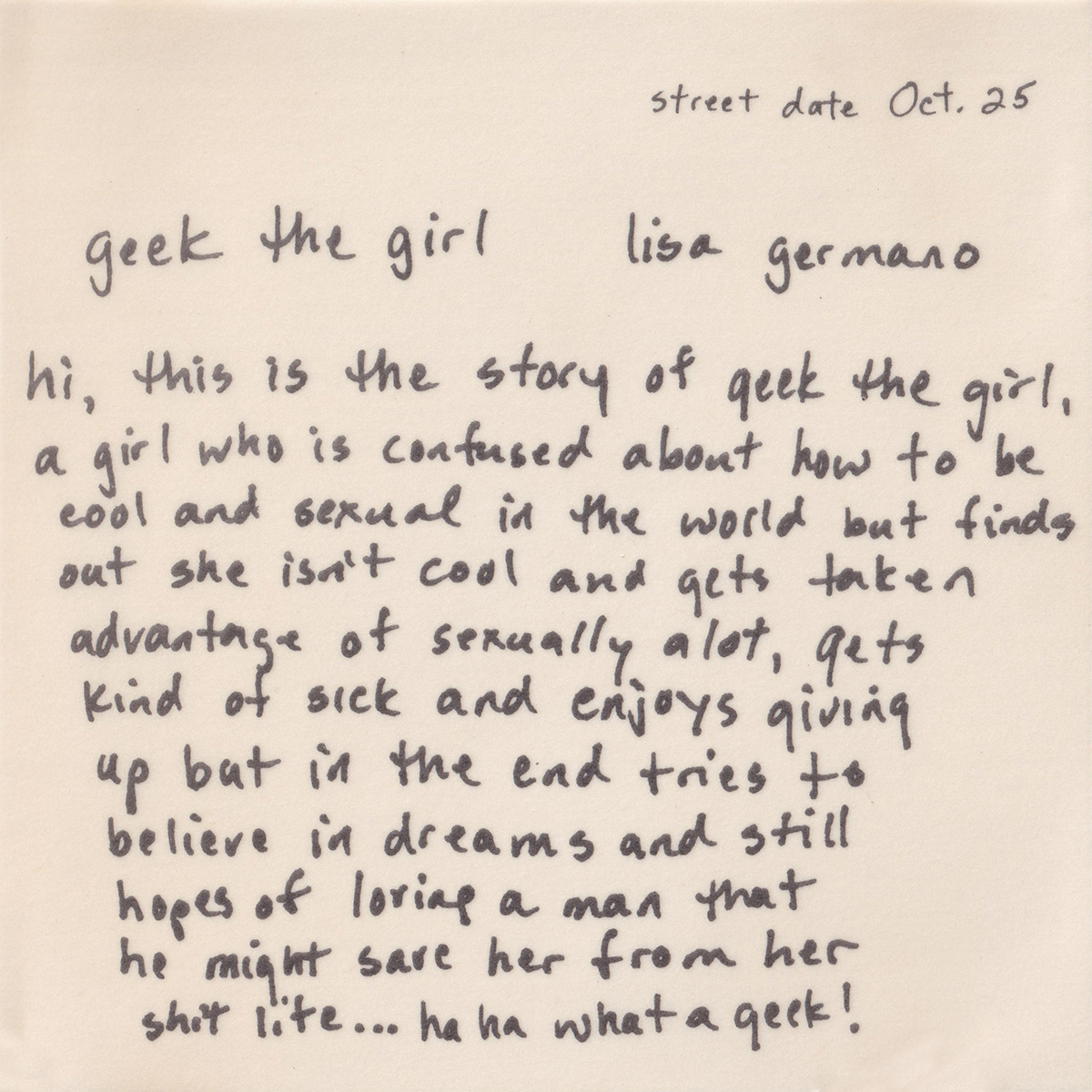 | 4AD | CD Promo | PRO-CD-7186-A | US | 1994 |
| 4AD | CD | rtd 120.1959.2 | Germany | 1994 |
| 4AD | CD | CAD 4017 CD | Belgium | 1994 |
| Rough Trade | Cassette Advance | None | Germany | 1994 | |
| 4AD | Cassette Advance | 45758 | US | 1994 | |
| None | Cassette Promo | None | UK | 1994 | |
| 4AD | CD | CAD 4017 CD | UK | 1994 | |
| 4AD | CD | COCY-78409 | Japan | 1995 | |
| 4AD | CD Reissue | GAD 4017 CD | US | 1999 |
 | 4AD | LP Reissue | 4AD0809LPE | Worlwide | 2025 |
| 4AD | LP Reissue Test Pressing | 4AD0809 | UK | 2025 | |
| 4AD | CD Reissue | 4AD0809CD | Worldwide | 2025 |
Videos
A music video was produced for “Cry Wolf.” The promotional single for the track—a promo-only CD release—featured an edited version of “Cry Wolf,” remixed versions of “Cancer of Everything” and “Sexy Little Girl Princess,” and the non-album track “The Mirror Is Gone.” “Cry Wolf” later appeared on the soundtrack to the 2003 New Zealand film Rain, introducing the album to a new generation of listeners.
Personnel
Lisa Germano: all instruments except where noted below
Kenny Aronoff: drums on “Geek the Girl,” “A Guy Like You,” and “Stars”
Malcolm Burn: drums and guitar on “Just Geek”; drums, dulcimer, and piano on “Sexy Little Girl Princess”; guitar on “Cancer of Everything”
Produced by Malcolm Burn
Tracks 3, 5, 9, and 12 mixed by Malcolm Burn (and Kenny Aronoff recorded) at Echo Park Studio, Bloomington, Indiana
Assistant Engineers: Mark Hood, Pat Keating, Ron Black
Mastered by Greg Calbi at Masterdisk
All songs written by Lisa Germano
“Just Geek” and “Sexy Little Girl Princess” co-written with Malcolm Burn
“Cry Wolf” co-written with Jay Joyce
“Frascilita” — traditional Sicilian folk tune
All songs published by Songs of PolyGram International / Door No. 1 / Emotional Wench Music (BMI), except as noted above
Photography: Dominic Davies
Art direction & design: Paul McMenamin at V23
Critical Reception
Geek the Girl arrived in October 1994 to strong critical notices, even as it struggled commercially. Spin magazine ranked Geek the Girl the 84th best album of the 1990s, and the title track was named the 91st best alternative rock song.
“One of the more haunting and enlightened projects of the year… raw in sound and subject.”
Josef Woodard
Entertainment Weekly (October 28, 1994)
“A beautiful, wrenching album.”
Paul Evans
Rolling Stone (November 3, 1994)
“Geek the Girl is a difficult album that pushes the listener away with its truculent tone just as it pulls them closer with whispered secrets. You may think it says nothing about the clear glass of your life but beware! Geek the girl lives in us all.”
Sarra Manning
Melody Maker (October 29, 1994)
“With Geek the Girl, Lisa Germano found the perfect balance of her work’s inherent contrasts… Geek the Girl‘s brave whispers hit on more emotional truths than the self-important screams of Germano’s mid-’90s, women-in-rock contemporaries.”
Heather Phares
AllMusic
Related Press

Dork on the Wild Side

Lisa Germano: Music Therapy
Geek Chic at Pump
Time Capsule: Lisa Germano, Geek the Girl
Related Releases