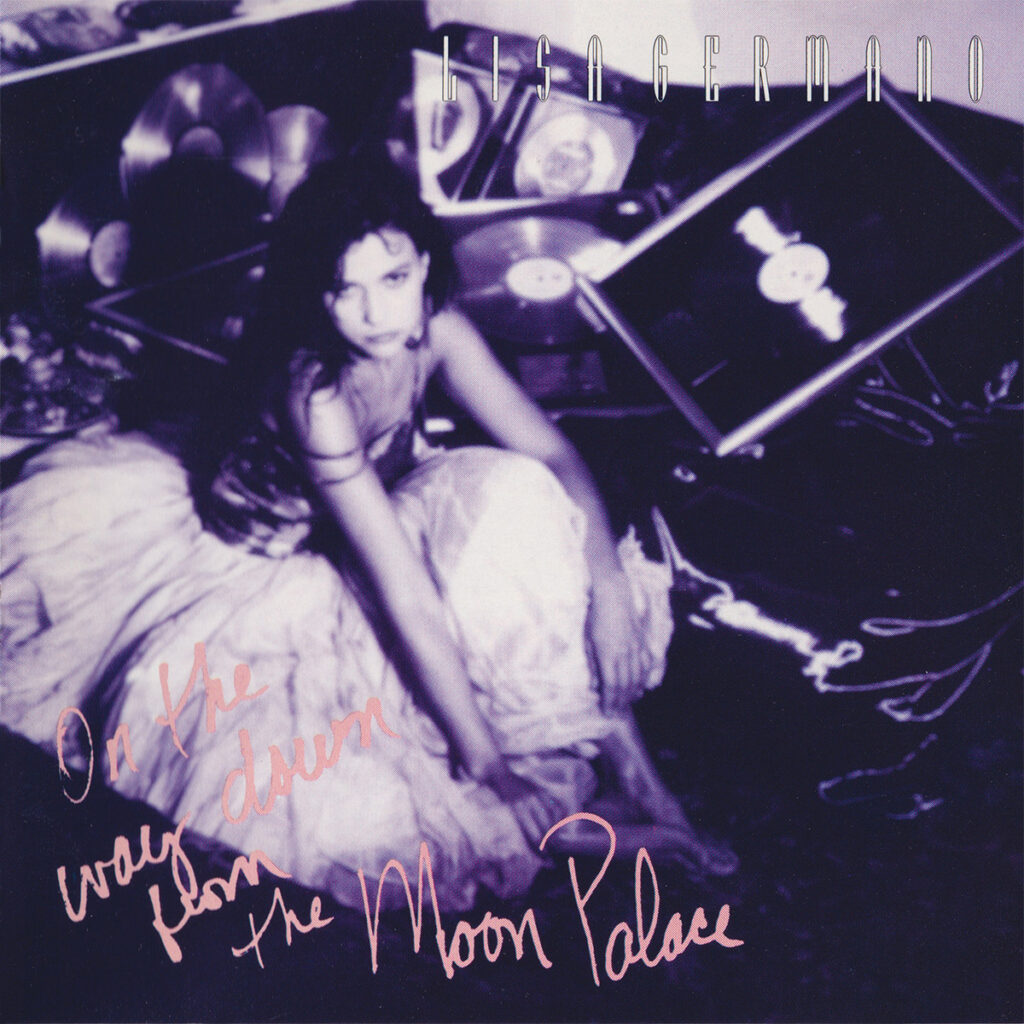




Once you’re down from the Moon Palace a record about learning that your happiness depends on yourself, not so much fun to learn, but hopefully… a happy result. Originally on Capitol, they changed hands right as this record was coming out and Gary Gersh let me take the record elsewhere.
Happiness is the second studio album by Lisa Germano and her major-label debut, released on July 27, 1993 through Capitol Records. Produced by Malcolm Burn—a key collaborator of Daniel Lanois who had engineered records by Bob Dylan, Peter Gabriel, and the Neville Brothers—the album was recorded primarily at Kingsway Studio in New Orleans’ French Quarter, a facility closely associated with the Lanois circle’s warmly atmospheric production aesthetic. The result was a record unlike anything Capitol had released: intimate, wry, psychologically detailed, and far more interested in shimmering interior states than radio-ready hooks.
The album marked Germano’s decisive separation from the alt-country and heartland rock contexts she had long been associated with through her work with John Mellencamp. Its songs span Celtic-flecked folk, droning electronics, bluesy rock, and something approaching dream-pop— held together not by genre but by a consistent emotional register: dark, sardonic, and occasionally, in a very Germano way, funny about it. “I wanted this album to be like whispering in someone’s ear,” Germano said of the record at the time.
Capitol’s tenure with the album was short and troubled. Personnel changes at the label gutted the team that had signed Germano, and the promotional effort collapsed before the record could find an audience. Germano retained her master tapes and eventually brought the album to the British label 4AD, which reissued it in April 1994 with a resequenced tracklist, new artwork, and two replacement tracks. The Capitol version, with its original sequence and full thirteen songs, remains a distinct document — brighter in presentation if not always in content, and the only version that includes “These Boots Are Made for Walkin'” and the instrumental “Breathe Acrost Texas.”
Background
Capitol Records signed Lisa Germano largely on the strength of one song. As she later recalled in an interview archived by Young God Records: “Basically I was signed for one song I wrote called ‘You Make Me Wanna Wear Dresses.’ This guy at Capitol thought that it could be a pop song so he signed me, but it was really the wrong thing to do because my music just doesn’t belong on major labels.”
The context was the final years of Germano’s long run as Mellencamp’s touring violinist, a role that had defined her public profile since the Scarecrow tour in 1985. Her debut, On the Way Down From the Moon Palace, had attracted industry attention despite its limited independent release, earning coverage in Rolling Stone, Creem, and Pulse according to Capitol’s own press release for Happiness, and catching the ear of the label’s A&R representative Tim Devine. Capitol saw an artist with crossover potential, an Americana-adjacent multi-instrumentalist with a distinctive voice and a proven touring pedigree, and signed her accordingly.
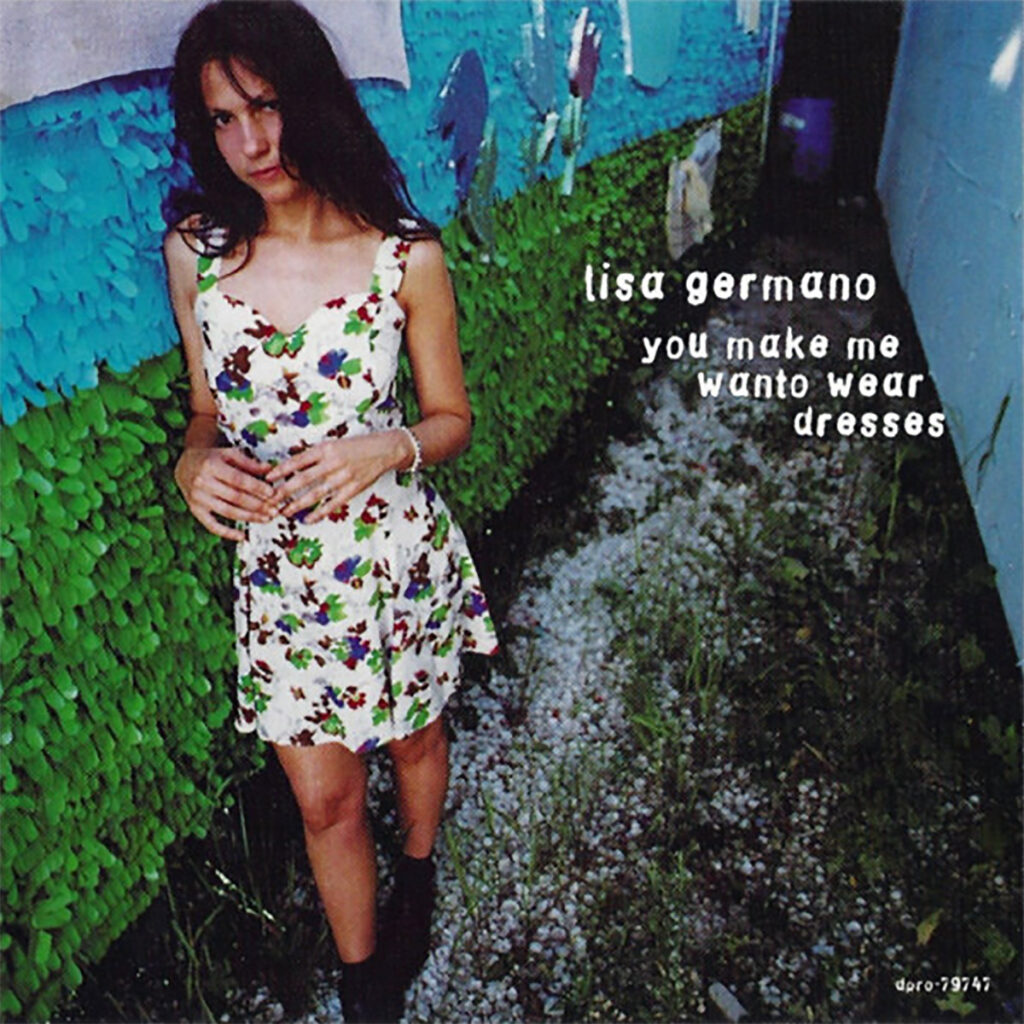
The label’s vision for Germano was one she never fully shared. In an interview quoted by Pause & Play, she described the tensions over “You Make Me Wanto Wear Dresses” directly: “I really like the version that’s on the album. To me, it’s kinda off, like the bass and the guitar and the violin are all completely out of tune, but when it’s all mixed together, it’s got a nice feel. They really wanted me to do that more pop-like. It’s nothing bad that they’re trying to do, so I went ahead and recorded it and they decided to release it as the single, but I told them it was important to me to have the original version on the record.”
“I fought so much at Capitol, like they wouldn’t let me have a mandolin on songs, or the track sequence I wanted, which should be completely the artist’s decision.”
Lisa Germano
Q Magazine (January 1995)
The mismatch between Capitol’s expectations and Germano’s sensibility extended to the recording sessions themselves. The album was made across four locations— Kingsway Studio in New Orleans, Champagne Studio in Nashville, September Studio in Indianapolis, and Germano’s home—a dispersal that reflected both practical logistics and the difficulty of containing the record within any single sonic setting. Capitol also insisted on the inclusion of a cover of Lee Hazlewood’s “These Boots Are Made for Walkin’,” a demand Germano complied with reluctantly. As she told Q Magazine in January 1995: “I fought so much at Capitol, like they wouldn’t let me have a mandolin on songs, or the track sequence I wanted, which should be completely the artist’s decision.”
By the time the album was released in July 1993, a significant management and personnel transition was underway at Capitol. The executives who had championed Germano’s signing were gone, and the label had neither the will nor the infrastructure to promote the record effectively. In a Denver Westword profile from 1994, Germano described discovering the extent of the problem firsthand: “I heard some of the publicists on the phone one day and I was absolutely shocked. At the time, you had Juliana Hatfield and Liz Phair and P.J. Harvey all out, and I just said, ‘How would you possibly try to sell one of those three girls if they didn’t play a fiddle with John Mellencamp?’ But Capitol was so into thinking that mentioning him was the only way they could promote my weird record that I lost any opportunity for people to find out it was a weird record.”
She was fortunate in one crucial respect: she retained ownership of the master recordings. Ivo Watts-Russell, founder and president of 4AD, had heard Happiness and moved to bring Germano to his label. Within months, the album had a new home and a new life.
Reluctant covers aside, Happiness was released in the summer of 1993 and received positive reviews from music critics, but this also came during a time where Capitol was going through a large organizational shift and everything came to a halting stop. Lisa was fortunate in that she was able release herself from her contract and take Happiness with her.
Serendipitously, Ivo Watts-Russel, then head of UK label 4AD, had heard the album and worked with Lisa for plans to re-release the album the following year.
Themes
Happiness takes its title ironically and runs with the contradiction for forty minutes. The album is an extended examination of self-doubt, emotional dependency, depression, and the way people use humor, sarcasm, and even self-laceration as coping mechanisms. Germano described the album’s subject matter in a 4AD press release as being “manipulated by uncontrollable outside forces,” and the songs bear that out—they document the gap between what one wants to feel and what one actually feels, and they do so with a dry, self-aware wit that keeps them from collapsing entirely into despair.
The title track is the clearest statement of the record’s central tension. Its lyrics are essentially a private joke at the expense of the singer’s own capacity for positive thinking: cyclical, self-defeating, and delivered with a smile. “Around the World,” which opens the Capitol version, establishes the sonic palette—wisps of processed sound, airy guitars, and quietly restless atmospherics—before “You Make Me Wanto Wear Dresses” introduces the more grounded, Celtic-tinged folk that Capitol had hoped would be the album’s commercial face. The song is about the fantasy of dependence, of wanting someone else to carry the weight of your own life—appealing, Germano noted in an interview for Westwood One, but not ultimately a good thing.
“Bad Attitude” and “Sycophant” sharpen the record’s tone considerably. The former contains one of Germano’s most nakedly self-lacerating couplets (“You wish you were pretty / But you’re not / Ha ha ha”), delivered with a sleepy flatness that makes it funnier and crueler at once. “Sycophant,” co-written with Jay Joyce and featuring quasi-tribal drumming and Germano’s near-chanted delivery, amounts to a catalog of distrust—”sycophant… political… beautiful… I don’t trust you”—that reads in retrospect as a kind of preemptive farewell to the industry she was already in conflict with.
The short instrumental “Miamo-Tutti”—named for one of Germano’s cats— functions as a midpoint break, a moment of quiet before the album’s second half. “Energy,” “Cowboy,” and “Puppet” occupy territory somewhere between folk and lo-fi rock, each exploring a different angle on need and disappointment. “Everyone’s Victim” closes out with the album’s most overtly distorted sound, Germano’s voice atop grinding guitars and a declaration of powerlessness that is, like so much of the record, both complaint and dark comedy.
The forced inclusion of “These Boots Are Made for Walkin'” sits awkwardly in this context. The Hazlewood/Sinatra classic is a song of defiant self-assertion; Germano’s version, with its chugging rhythm and pots-and-pans percussion, delivers the words without the conviction—which is arguably the point, whether intentional or not. Capitol reportedly hoped the recognizable song would broaden the album’s appeal; Germano’s halfhearted delivery suggests she wasn’t persuaded.
“The Darkest Night of All” closes the Capitol version with characteristic ambivalence, offering not resolution but a tentative, hard-won acceptance of loss and pain as conditions of existence.
Released: July 27, 1993
Label: Capitol Records
Catalog: cpd 0777 7 98691 2 1
Formats: CD, Cassette
Country: US
Availability: Moderate
| No. | Title | Length |
|---|---|---|
| 1 | Around the World | 4:43 |
| 2 | You Make Me Wanto Wear Dresses | 3:12 |
| 3 | Happiness | 3:45 |
| 4 | Bad Attitude | 4:43 |
| 5 | Sycophant | 4:26 |
| 6 | Miamo-Tutti | 1:20 |
| 7 | Energy | 3:37 |
| 8 | Cowboy | 4:07 |
| 9 | Puppet | 4:01 |
| 10 | These Boots Are Made for Walkin’ | 4:34 |
| 11 | Breathe Acrost Texas | 1:31 |
| 12 | Everyone’s Victim | 4:47 |
| 13 | The Darkest Night of All | 4:41 |
Happiness was recorded primarily at Kingsway Studio in New Orleans, with additional sessions at Champagne Studio in Nashville, September Studio in Indianapolis (the same studio where On the Way Down From the Moon Palace had been made), and at Germano’s home. The album was mixed at Kingsway—with one exception: “Energy” was mixed at Pinebrook Studio in Alexandria, Indiana. Mastering was handled by Greg Calbi at Sterling Sound in New York City.
The choice of Malcolm Burn as producer was a decisive one. Burn had spent years inside the sonic world constructed by Daniel Lanois—engineering and playing on sessions for Bob Dylan (Oh Mercy), Peter Gabriel (Us), the Neville Brothers (Yellow Moon), and Emmylou Harris (Wrecking Ball), among others. Kingsway was Lanois’ own New Orleans studio, and Burn’s familiarity with its particular acoustic character was integral to the album’s sound. A Something Else! review from 2018 described the resulting atmospherics as another instrument in the palette, citing the “stealthy, ethereal pedal steel on ‘Cowboy'” and the guitar work on “Everyone’s Victim” as examples of Burn applying the same attention to shimmering environmental detail that characterized his Lanois-era work.
On Happiness, Germano is credited as playing violin, mandolin, tin whistle, zither, and providing backing vocals—a more varied instrumental role than she had taken on Moon Palace, and one that reflected both her expanding ambitions and the production latitude Burn gave her. Burn himself contributed organ, guitar, harmonica, and synthesizer. The album’s session musicians included Ronald Jones, Daryl Johnson, Bill Dillon, Jay Joyce, Michael Radovsey, Kenny Aronoff, Toby Myers, and John Keane.
“Sycophant” was co-produced by Jay Joyce, who also co-wrote the track. The mixing was shared: Burn and Wayne Lorenz handled tracks 1 through 6 and 8 through 13; Paul Mahern mixed “Energy” (track 7) at Pinebrook.
The recording was spread across multiple studios partly by necessity and partly by the nature of the songs themselves. Certain tracks were recorded at Germano’s home, where she was most at ease—a logistical spread that, while not unusual for major-label records of the period, introduced a quality of variance across the sessions that Germano and Burn then had to reconcile in the mix.
A note on the “You Make Me Wanto Wear Dresses” single: Capitol released a promotional single with a separately recorded radio version of the song, remixed by Don Smith and mastered by Greg Calbi, that was slightly shorter and uniquely mixed, distinct from both the album version and any subsequent 4AD remixes. The liner notes of the Capitol album include a pointed thank-you from Germano acknowledging those who mixed what she dryly called “version 102 of THAT SONG,” suggesting the song’s protracted refinement process was a source of friction.
Packaging & Design

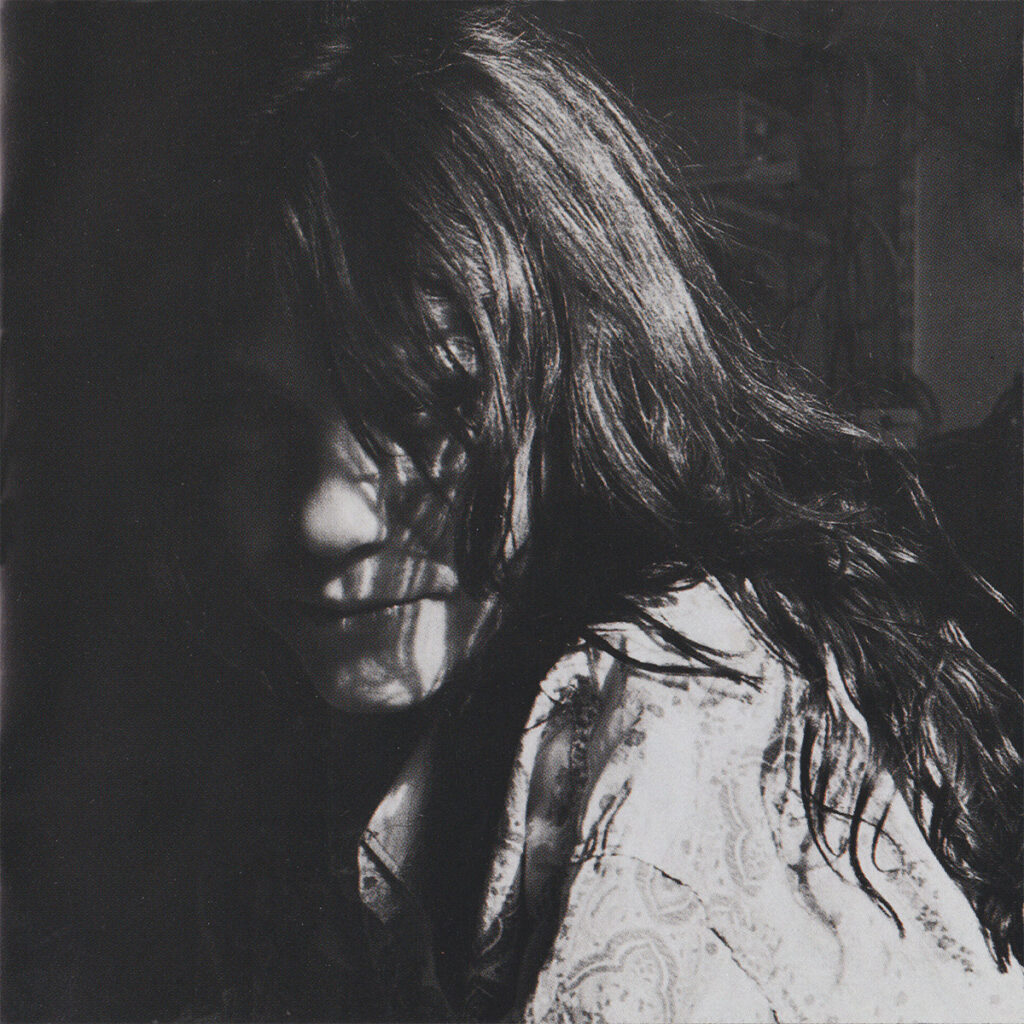
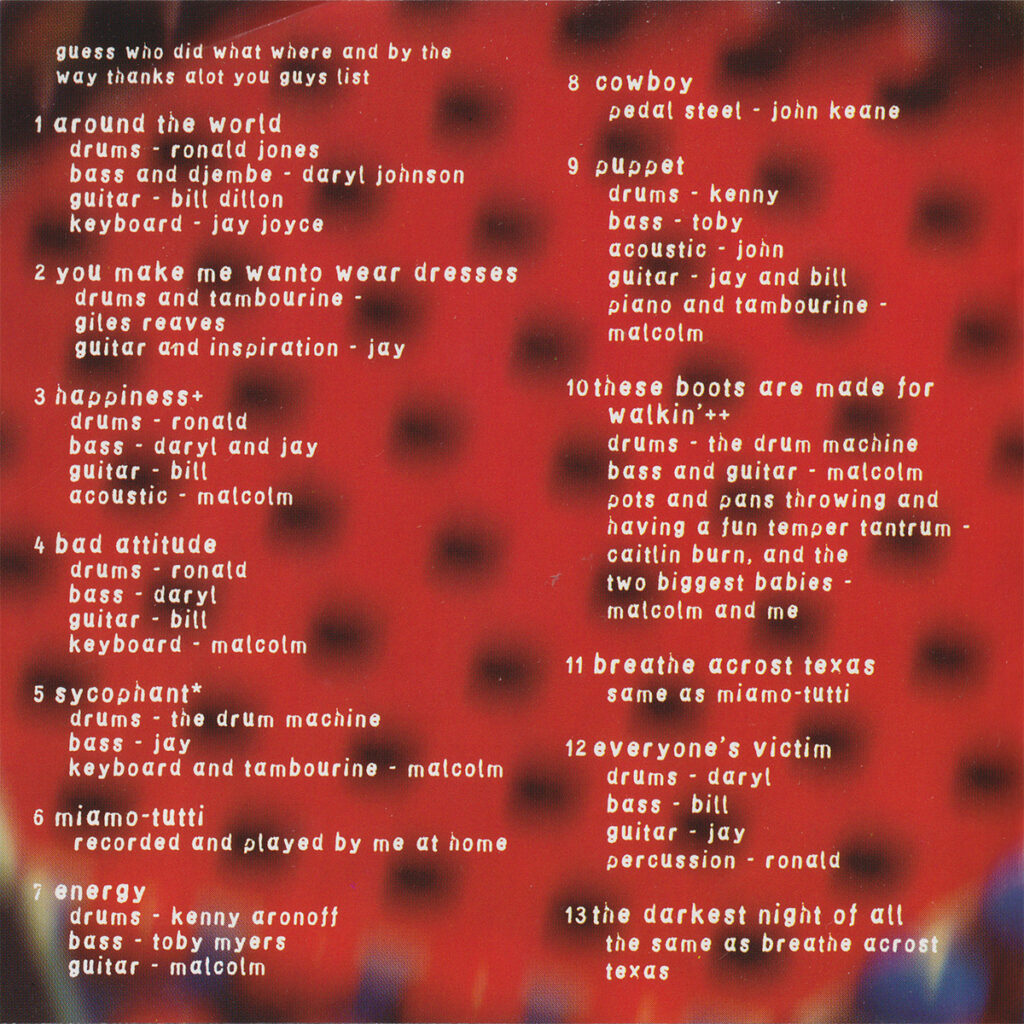
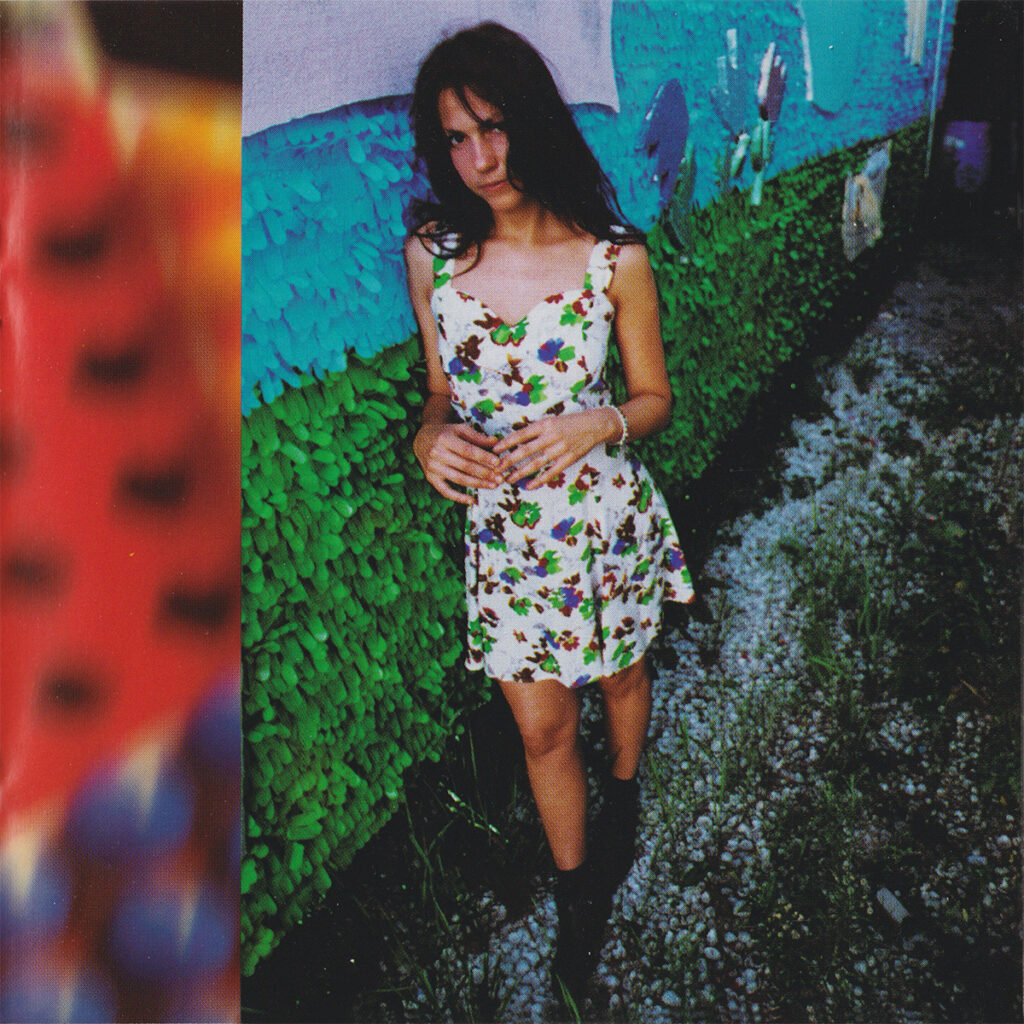
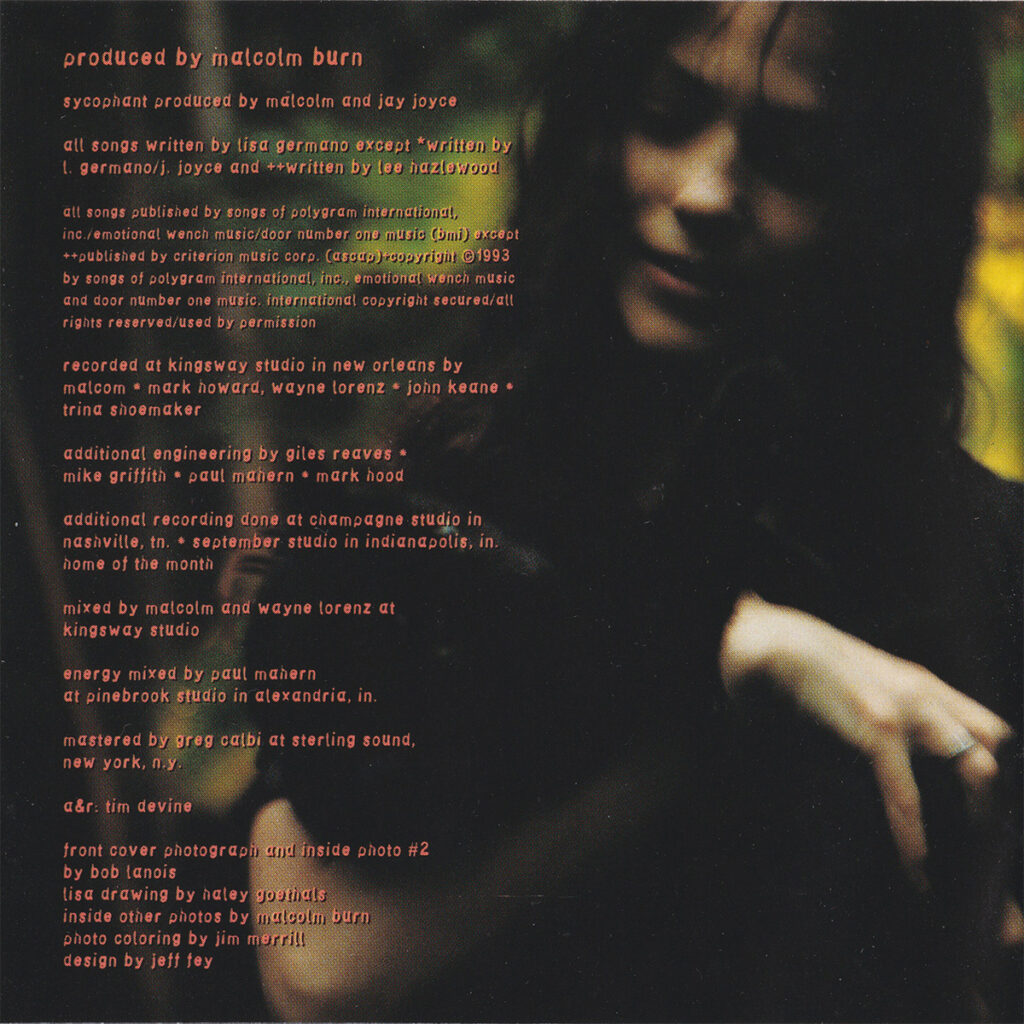
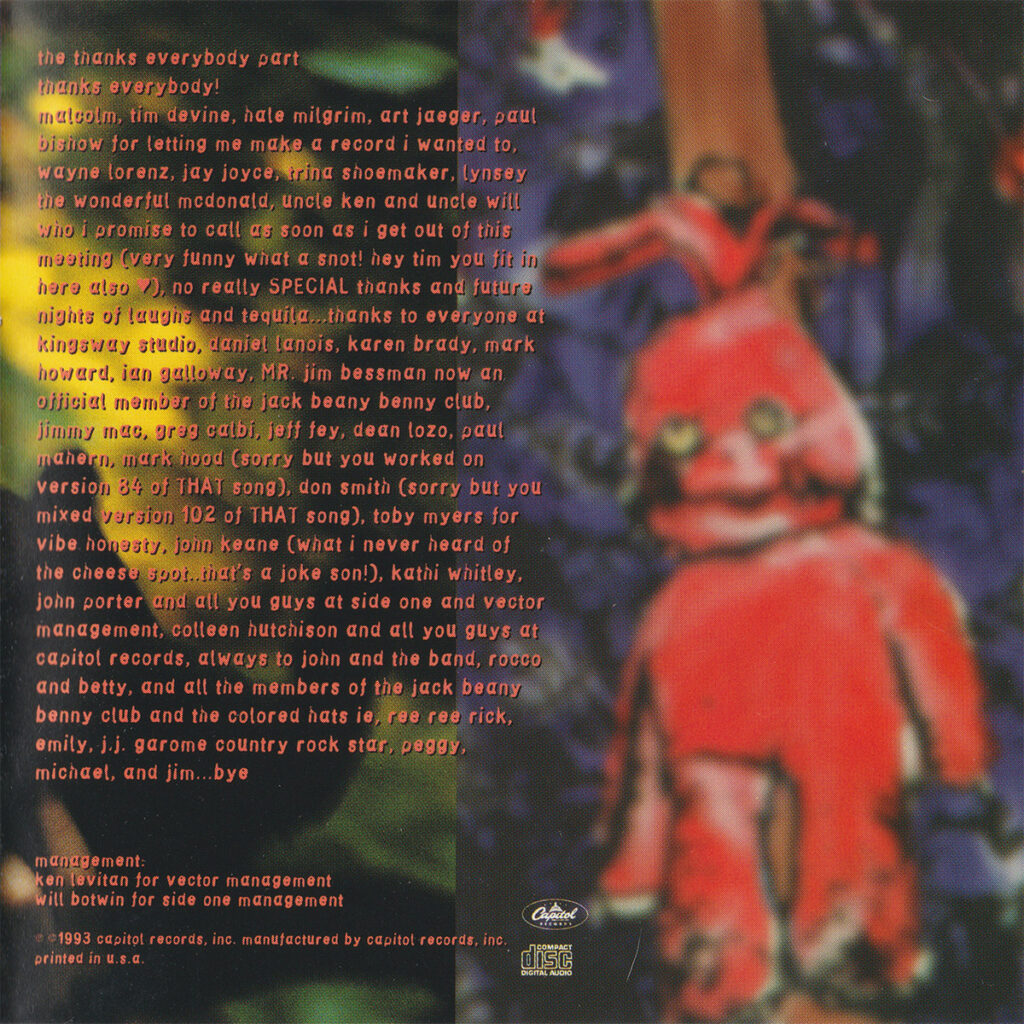
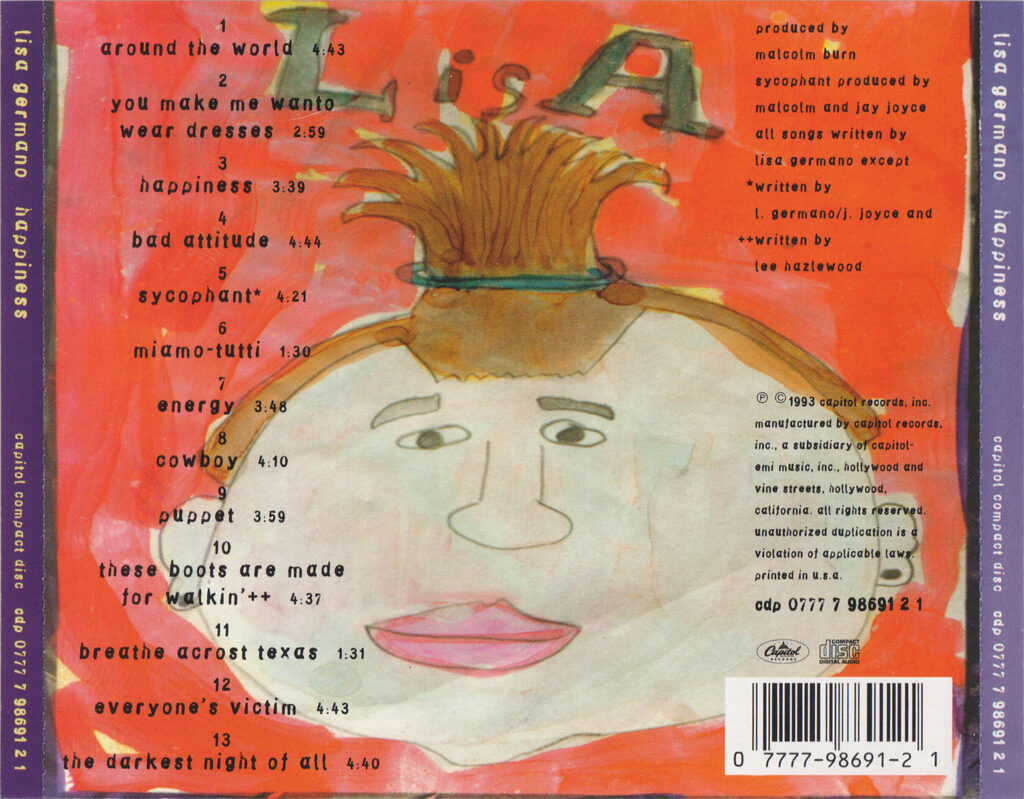
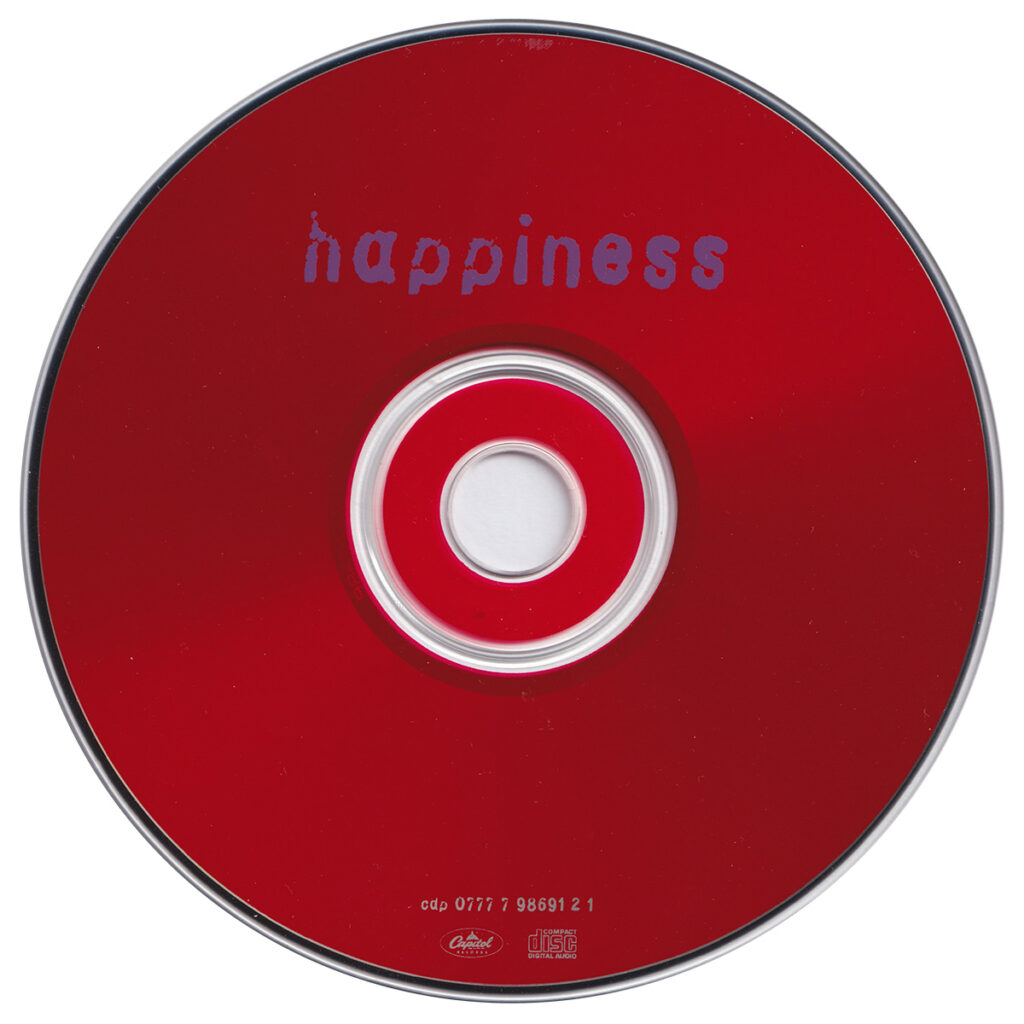
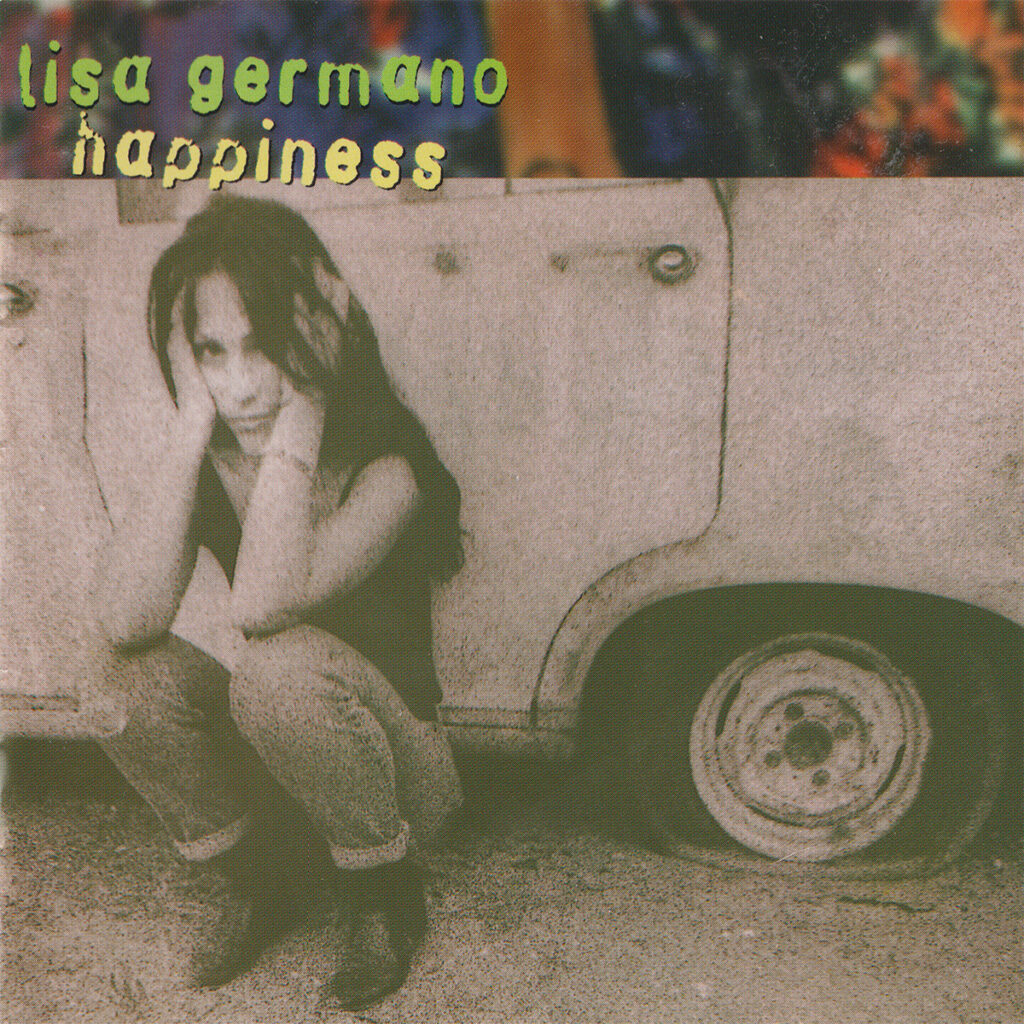
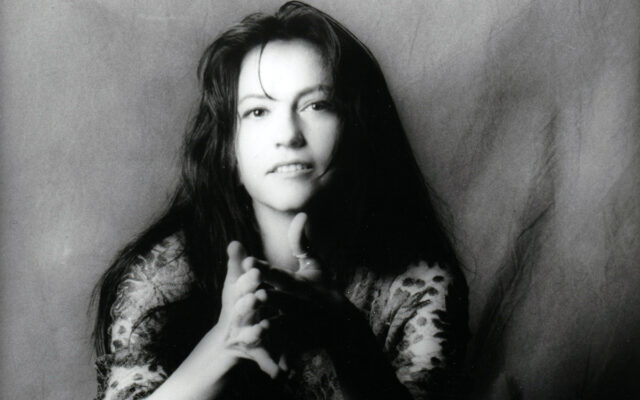
The Capitol version of Happiness presents Germano in a warmer, more approachable visual register than either her self-released debut or the 4AD reissue that would follow. The front cover features a photograph of Lisa by Bob Lanois with photo coloring by Jim Merrill. Interior photographs were also taken by Malcolm Burn. The rear cover features a drawing of Lisa by Haley Goethals. Album design was by Jeff Fey. The artist and title text use Inkbleed, the same font used for the “You Make Me Wanto Wear Dresses” promotional single.
The overall presentation—images of Germano in various settings and outfits — reflects Capitol’s intention to sell her as a personable, approachable artist. The mimsyfarmerfanclub.com retrospective described it plainly: “images of Germano posing in flowery sun dresses.” This was not accidental. As the same piece observed, Capitol’s visual strategy was oriented toward a particular consumer profile—the “alt-country pixie girl” they believed could cross into the mainstream, and the packaging reflected that positioning.
The contrast with the 4AD artwork that replaced it in 1994 could not have been more complete. Where Capitol put Germano’s face and personality at the center, Vaughan Oliver and Adrian Philpott’s 4AD design went entirely abstract—gauzily unsettling images of dolls and masks, no photographs of the artist, and the full visual grammar of 4AD’s house aesthetic. The transition in artwork was itself a statement about which version of Happiness was being offered.
The Capitol release was issued in standard CD jewel case and cassette formats (the cassette pressed with Dolby HX Pro). A limited promotional poster, using the same Bob Lanois cover photograph and Inkbleed font, was distributed to radio stations and record stores to support the album’s release.
Additional Versions
| Label | Format | Catalog No. | Country | Year | |
|---|---|---|---|---|---|
 | Capitol | CD | cdp 0777 7 98691 2 | US | 1993 |
| Capitol | CD | C2 0777 7 98691 2 1 | Canada | 1993 |
| Capitol | CD | 0777 7 98691 2 1 | Europe | 1993 |
| Capitol | Cassette | C4 0777 7 98691 4 5 | US | 1993 | |
| Capitol | Cassette Promo Dolby HX Pro | C4-98691 | US | 1993 | |
| Capitol | Cassette Promo Non Dolby | C4-98691 | US | 1993 |
Personnel
Lisa Germano: violin, mandolin, tin whistle, zither, backing vocals
Malcolm Burn: organ, guitar, harmonica, synthesizer
Ronald Jones: guitar
Daryl Johnson: bass
Bill Dillon: guitar
Jay Joyce: guitar, co-producer (“Sycophant”)
Michael Radovsey: guitar
Kenny Aronoff: drums
Toby Myers: bass
John Keane: guitar, recording
All songs written by Lisa Germano, except “Sycophant” (co-written by Lisa Germano and Jay Joyce) and “These Boots Are Made for Walkin'” (written by Lee Hazlewood)
Produced by Malcolm Burn
Co-produced by Jay Joyce on “Sycophant”
Recorded by Malcolm Burn, Mark Howard, Wayne Lorenz, John Keane, and Trina Shoemaker
Additional engineering by Giles Reaves, Mark Hood, Mike Griffith, and Paul Mahern
Mixed by Malcolm Burn and Wayne Lorenz (tracks 1–6, 8–13), Paul Mahern (track 7, “Energy”)
Mastered by Greg Calbi at Sterling Sound, New York, NY
Recorded at Kingsway Studio, New Orleans, LA; additional recording at Champagne Studio, Nashville, TN; September Studio, Indianapolis, IN; and Germano’s home
Mixed at Kingsway Studio; “Energy” mixed at Pinebrook Studio, Alexandria, IN
A&R: Tim Devine
Design: Jeff Fey
Front cover and interior photography: Bob Lanois
Additional photography: Malcolm Burn
Photo coloring: Jim Merrill
Back cover artwork (Lisa drawing): Haley Goethals
Management: Ken Levitan, Will Botwin
Published by Songs of PolyGram International, Inc. / Emotional Wench Music / Door Number One Music (BMI), except “These Boots Are Made for Walkin'” published by Criterion Music Corp. (ASCAP)
Videos
A music video for “You Make Me Wanto Wear Dresses” was produced for Capitol Records and directed by Laura Levine. The video features animated/cartoon backdrops of castles and uses the promotional radio edit of the song—a slightly shorter, separately mixed version not found on the album. Capitol’s visual marketing intent is evident in the video’s presentation: it positions Germano against playful, romantic imagery, reflecting the label’s aspiration to frame her as an accessible, quirky-but-accessible pop figure. The video was serviced to Capitol’s alternative and college radio promotions teams alongside the single in June 1993.
Press Release
As part of their promotional material, Capitol Records issued this press release to journalists, critics, and radio stations. This was included on advance copies of the album.
Lisa Germano's search for Happiness begins and ends in her own backyard. Lisa makes the most intimate confessions with a fragile vocal style that belies the often tongue-in cheek sarcasm that laces the lyrics. Using violin, guitar, mandolin, and piano she creates shimmering musical backdrops from the Celtic gig of "You Make Me Wanto Wear Dresses" to the violins underlining buzzaw guitars in "Everyone's Victim" and the Indian raga of "Sycophant."

Prior to the June 29 release of Happiness, Lisa will be embarking on the "In Their Own Words" tour with label mate Johnny Clegg, David Baerwald, and Freedy Johnston. The first single and video, "You Make Me Wanto Wear Dresses" will be serviced to PAR, Alternative and College Radio on June 7.

Lisa Germano has toured and recorded with John Mellencamp since the "Scarecrow" tour. In addition, she has toured with Simple Minds and done studio sessions with Bob Seger, U2, the DBs, the Indigo Girls and a host of others.

With numerous four star reviews already under he belt for the independent release Down Under the Moon Palace, including Rolling Stone, Creem and Pulse, Happiness is already garnering early attention from a wide array of print media.

Lisa says that I... "wanted this album to be like whispering in somebody's ear." It would seem that the whisper has turned into a scream.
Critical Reception
Happiness received broadly favorable reviews at the time of its Capitol release in the summer of 1993, though the collapse of label support meant that critical momentum was not converted into sales.
“Germano’s second album—and major-label debut—possesses no squashy ditties about small towns or uptowns. Instead, it’s a mocking look at her own damaged idealism and doom-laden but humorous outlook on life. The music, which includes Middle Eastern, Celtic, and country influences in raw, discordant drones and music-box prettiness, takes a backseat to her sarcastic and often self-effacing lyrics.”
Lorraine Ali
SPIN (August 1993)
“Compared to Germano’s self-financed debut, On the Way Down From the Moon Palace, Happiness is a more cohesive and evenly listenable work, but with all the experimental quirks left in.”
Tattyana Mishel
Detour (September 1993)
“It remains an album that is dimly lit, boldly direct, and yet accommodatingly enigmatic.”
Jimmy Nelson
Something Else! (November 1998)
“With 1993’s Happiness, Capitol Records tried to sit Lisa Germano on a fence between Americana and alternative.”
Kurt Wildermuth
PopMatters (February 2023)
Additional Press
Lisa Germano: The Pursuit of Happiness
Germano’s Latest a Rewarding Work
Germano’s ‘Happiness’ is Filled With Confusion
Loud Rebel
Related Releases