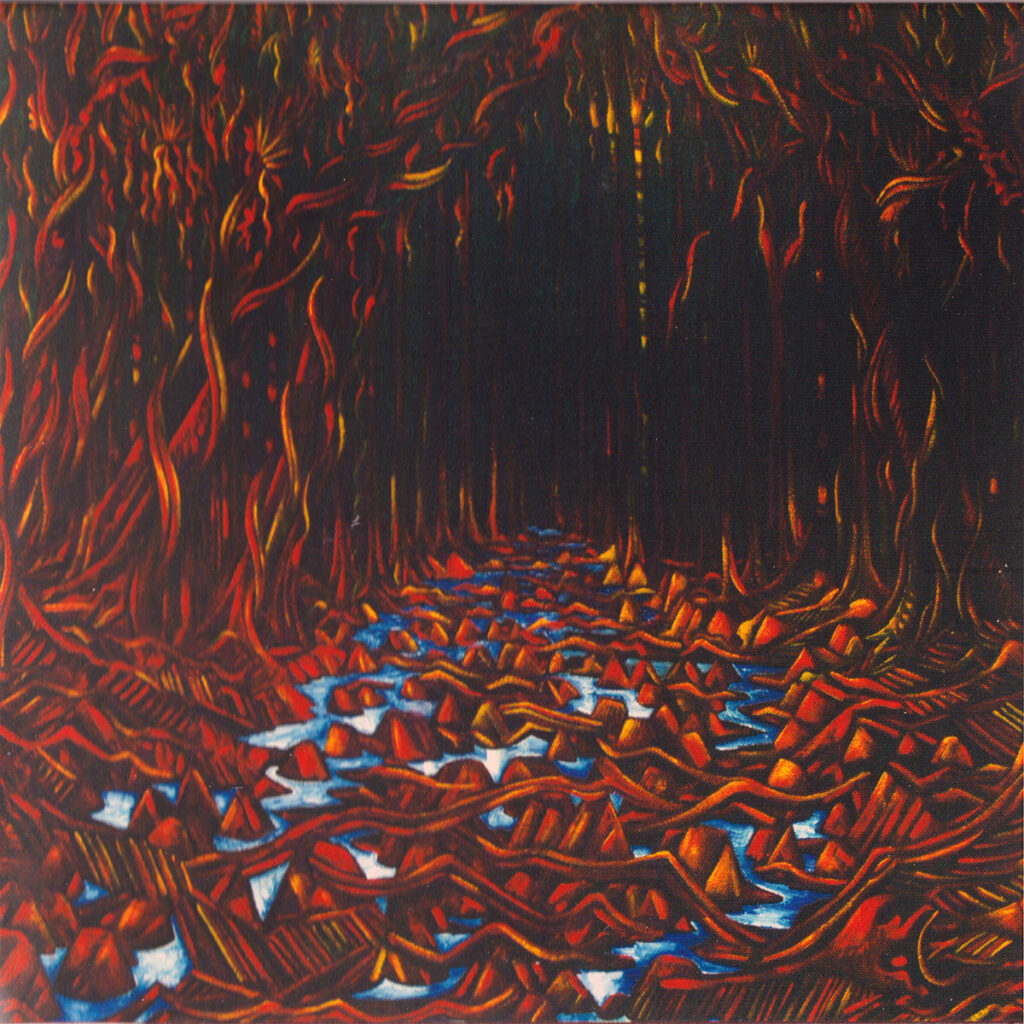




I don’t know… except my communication with myself, the earth and its beings is getting weirder every day. It seems as if I could replace all the shit in my head, my troubles relating to humans back to the earth and its beings’ trouble relating back to me. I think that’s what this record is about.
Released on February 12, 2013, No Elephants is Lisa Germano’s tenth studio album and her most recent to date. It is also her first for Portland, Oregon-based Badman Recording Co., home to artists like The Innocence Mission and The Builders & The Butchers. Produced, recorded, and mixed by longtime collaborator Jamie Candiloro at his Banana Chicken Studios in Los Angeles, the album is a sparse, glitchy, deeply atmospheric meditation on disconnection—from nature, from one another, and from ourselves.
After completing No Elephants, Germano first reached out to Michael Gira at Young God Records, who had released her previous two albums, In the Maybe World (2006) and Magic Neighbor (2009). Gira was encouraging—he liked the record—but was refocusing his energy on Swans and didn’t feel he could give it the attention it deserved. He suggested Germano consider self-releasing, which was increasingly the norm for independent artists. But Germano resisted. She felt a deep aversion to the all-digital model of music distribution, valuing physical media, artwork, and the support of a label. Through mutual friends, she eventually connected with Dylan Magierek at Badman Recording Co. and felt an immediate kinship with his commitment to tangible music.
Background
Found sounds play a critical role throughout. Germano used iPhone field recordings of birdsong, animal calls, and natural atmospheres alongside the intrusive textures of modern technology, including cell phone interference, dial tones, electronic buzzes and hums. These sounds are woven into the fabric of the music, not as mere decoration but as thematic counterpoints. The natural world and the digital world coexist uneasily, and the tension between them is the album’s central sonic drama.
The album’s title carries multiple layered meanings, something Germano had been turning over in her mind for years before the songs took shape. At its most basic, “no elephants” is a play on the idiom “the elephant in the room,” the unspoken thing that looms over a conversation. Germano initially envisioned a record about honesty and transparency, about there being nothing left unsaid. But as the songs came into focus, the meaning shifted: in an age of constant digital connectivity, she came to feel that the elephant in the room had disappeared not because people were finally being honest, but because they had stopped truly communicating altogether. Everyone was plugged in and tuned out. A third meaning emerged as well—the literal one, about the extinction and poaching of elephants and the broader crisis of animal cruelty. All three threads run through the album simultaneously.
No Elephants marked the fourth consecutive collaboration between Germano and Candiloro, who had worked in an increasingly central role on Lullaby for Liquid Pig, In the Maybe World, and Magic Neighbor. For this album, Germano gave Candiloro full production credit for the first time, acknowledging how essential his role had become in helping her overcome her own hesitation about recording. As she explained in interviews, Candiloro gave her the confidence to commit to ideas she might otherwise have abandoned, and had an intuitive sense of where her instincts were headed, even when she changed her mind mid-take.
The album’s personnel is strikingly minimal. Germano wrote all the songs and performed the vast majority of the instrumentation herself, including piano, organ, violin, and vocals. Candiloro contributed drum loops and what the liner notes describe as “unearthly sounds.” Sebastian Steinberg, formerly of Soul Coughing, added acoustic bass to select tracks, and Germano has noted that his contributions helped make the album feel whole. The remaining “performers” are credited with characteristic Germano humor: bees, cell phones, and a bunch of animals.
Found sounds play a critical role throughout. Germano used iPhone field recordings of birdsong, animal calls, and natural atmospheres alongside the intrusive textures of modern technology, including cell phone interference, dial tones, electronic buzzes and hums. These sounds are woven into the fabric of the music, not as mere decoration but as thematic counterpoints. The natural world and the digital world coexist uneasily, and the tension between them is the album’s central sonic drama.
Themes
Germano has consistently resisted the label of “protest album” for No Elephants, describing it instead as a record about consciousness. Where Magic Neighbor explored the possibility of seeing the day and opening new doors, No Elephants is more outward-looking, grappling with how humanity treats the natural world and how technology has eroded genuine connection. The food industry, factory farming, animal testing, ivory poaching, bee colony collapse, recycling apathy—all of these concerns surface across the album’s twelve tracks, but never as polemic. Germano’s approach is oblique and poetic, working through feeling rather than argument.
Michael Pollan’s In Defense of Food was a direct inspiration, having opened Germano’s eyes to the manipulation of the food industry and helped crystallize many of the album’s themes. But the songs resist easy interpretation. Animals appear and disappear throughout—in the lyrics and in sound—serving as both literal subjects and metaphors for vulnerability and voicelessness. The lyrics are fragmentary and often impressionistic, designed more to express unarticulated feelings than to convey clear messages.
The album is also concerned with the paradox of modern communication. Germano saw cell phones, social media, and the digital world as tools that create the illusion of connection while actually deepening isolation. She incorporated the sounds of these devices into the recordings deliberately, placing them alongside natural sounds to underscore the contrast. One idea that particularly captivated her: the theory that electromagnetic radiation from cell towers may disrupt the navigational dances of honeybees—a notion she channeled into the instrumental “Dance of the Bees,” layering digital interference over the sound of a buzzing hive.
Released: February 12, 2013
Label: Badman Recording Co.
Catalog No: BRCD-918
Format: CD, Digital
Country: US
Availability: Buy Now
| No. | Title | Length |
|---|---|---|
| 1 | Ruminants | 3:20 |
| 2 | No Elephants | 4:25 |
| 3 | Apathy and the Devil | 2:38 |
| 4 | Back to Earth | 1:39 |
| 5 | Haunted | 2:51 |
| 6 | A Feast | 3:24 |
| 7 | Up in the Air | 2:44 |
| 8 | Dance of the Bees | 2:05 |
| 9 | Diamonds | 3:38 |
| 10 | …And So On | 2:30 |
| 11 | Last Straws for Sale | 3:21 |
| 12 | Strange Bird | 2:31 |
Like all of Germano’s albums, No Elephants is conceived as a unified whole—a book to be read from beginning to end. Melodies and ideas recur and transform across its thirty-five minutes, with foreshadowing and thematic callbacks weaving the songs into a single narrative arc. It demands and rewards the kind of sustained, attentive listening that Germano has always championed.
Sonically, it is among her most hushed and restrained records. The arrangements are built primarily from piano, organ, and violin, often sounding as though they are being played softly in another room. Germano’s voice rarely rises above a murmur, shifting between a low rasp and a tremulous falsetto, sometimes placed at the center of the mix and sometimes receding into the background. Silence is used as an active compositional element—the empty spaces between notes are as essential as the notes themselves.
The album opens with “Ruminants,” which begins with fluttering wings and birdsong before a slow, soft piano enters. Germano’s falsetto floats above it, dissolving words like “hogwash” and “bulldozer” into something unexpectedly emotive—a technique of turning language into pure sound and feeling. The title track is eerily sparse, built on an echo-laden minor key piano figure, with Germano sighing softly over the top as the song gradually fills with snatches of keyboard, violin, whistles, and cell phone buzz before dissolving again. “Apathy and the Devil” introduces distorted drum loops beneath piano and electronic haze—a song Germano has said was inspired by recycling apathy and the way that indifference compounds across every aspect of life. “Back to Earth” is a brief interlude constructed almost entirely from looping dial tones. “A Feast” uses detuned sleigh bells and off-kilter percussion to evoke the discomfort of sitting at a table surrounded by unconscious consumption—foie gras, suckling pigs, ivory vases. “Up in the Air” follows a similar trajectory in a more start-and-stop rhythm. The wordless “Dance of the Bees” layers digital noise over a Spanish guitar figure and the hum of insects. “Diamonds” builds through a patient crescendo for piano and strings, touching on exploitation and the alchemy of making something beautiful from something ugly. “…And So On” is one of the album’s warmest moments, a gentle piano-and-voice piece with distant cowbells and animal calls drifting through the background. “Last Straws for Sale” pushes Germano’s fractured lyricism to its limits. And “Strange Bird” closes the album fittingly—a simple, fragile song that fades into birdsong and silence.
Packaging & Design
The album’s distinctive artwork and photography were created by Los Angeles-based artist Lizzy Waronker, who specializes in assemblage and miniature mythologies. Germano had met Waronker through her husband, drummer Joey Waronker, while recording Lullaby for Liquid Pig. At the time, Waronker was writing poetry and told Germano that her music inspired her to finish pieces. Years later, Germano discovered Waronker’s visual art and knew she was the right collaborator for this project.
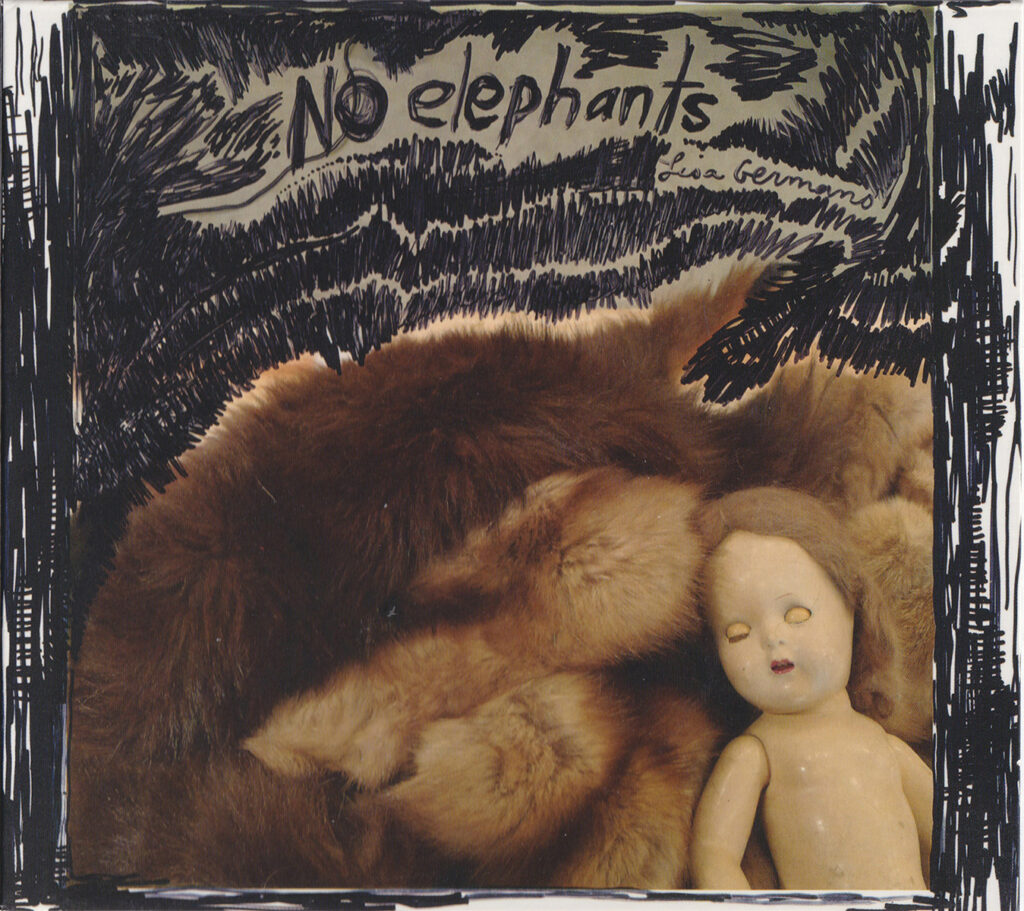
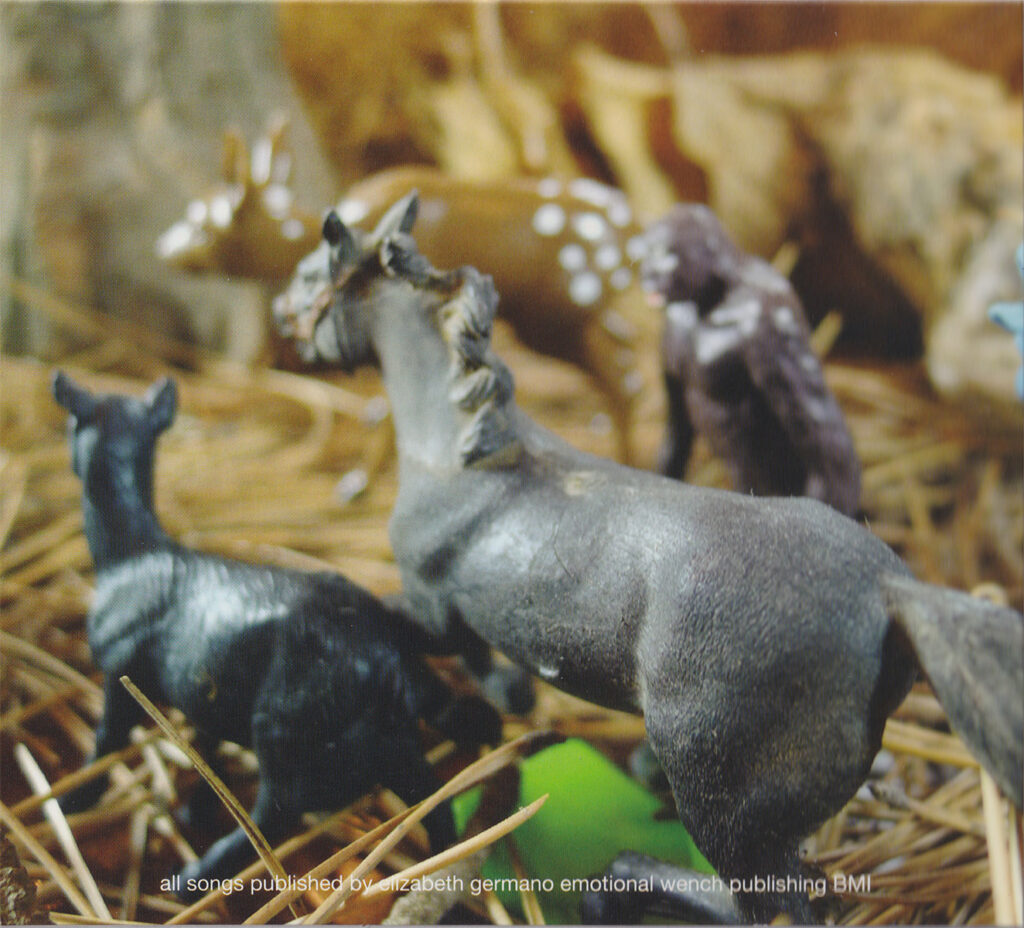
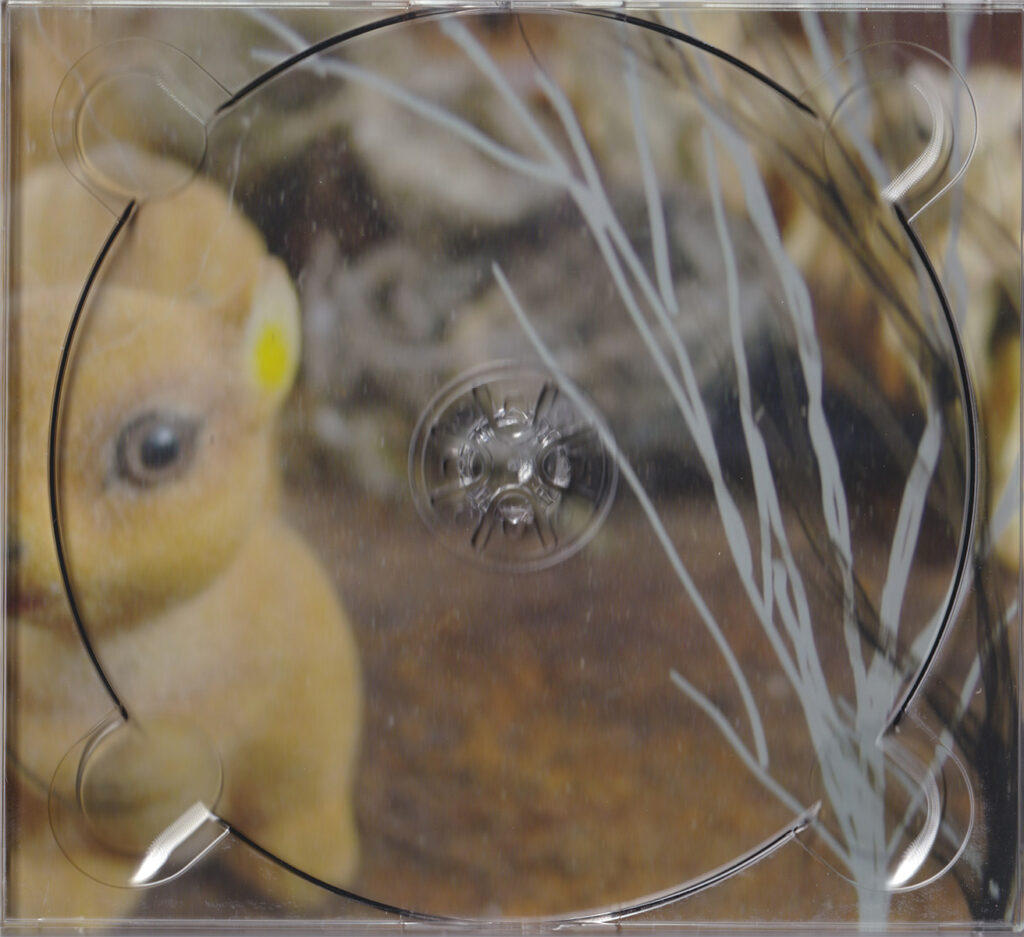
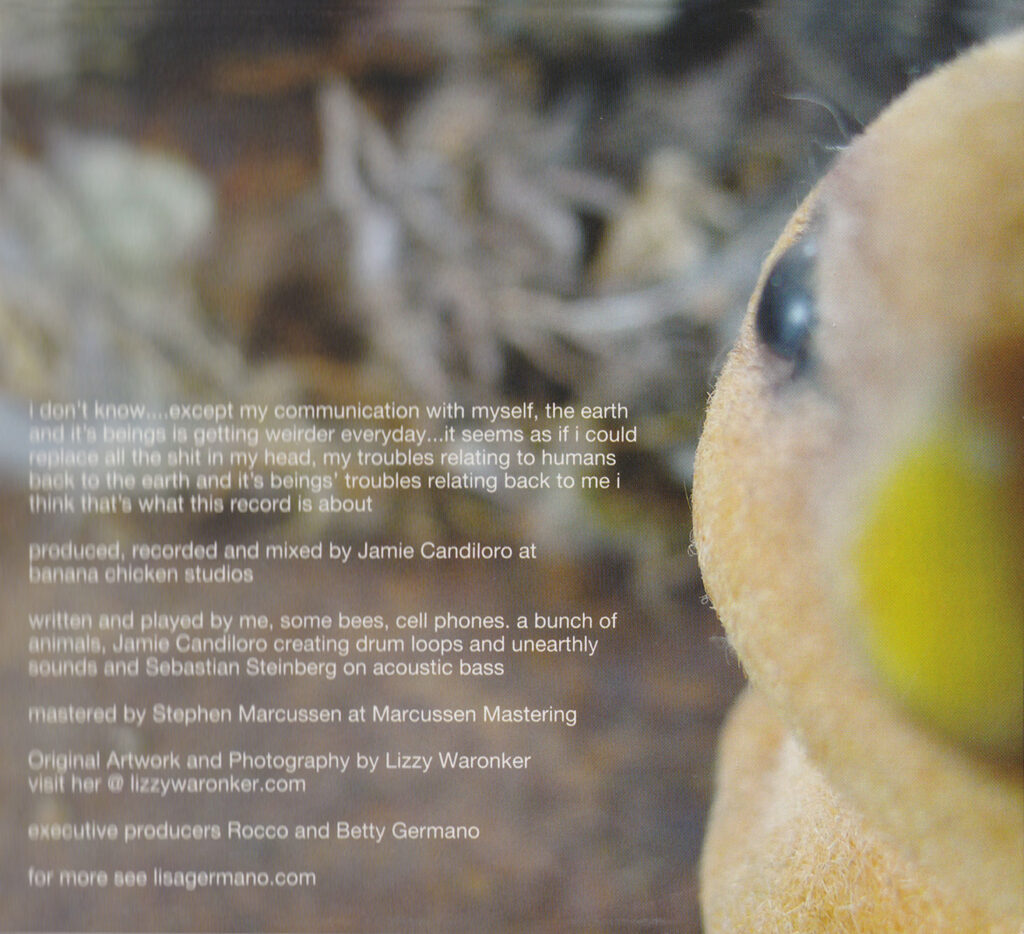
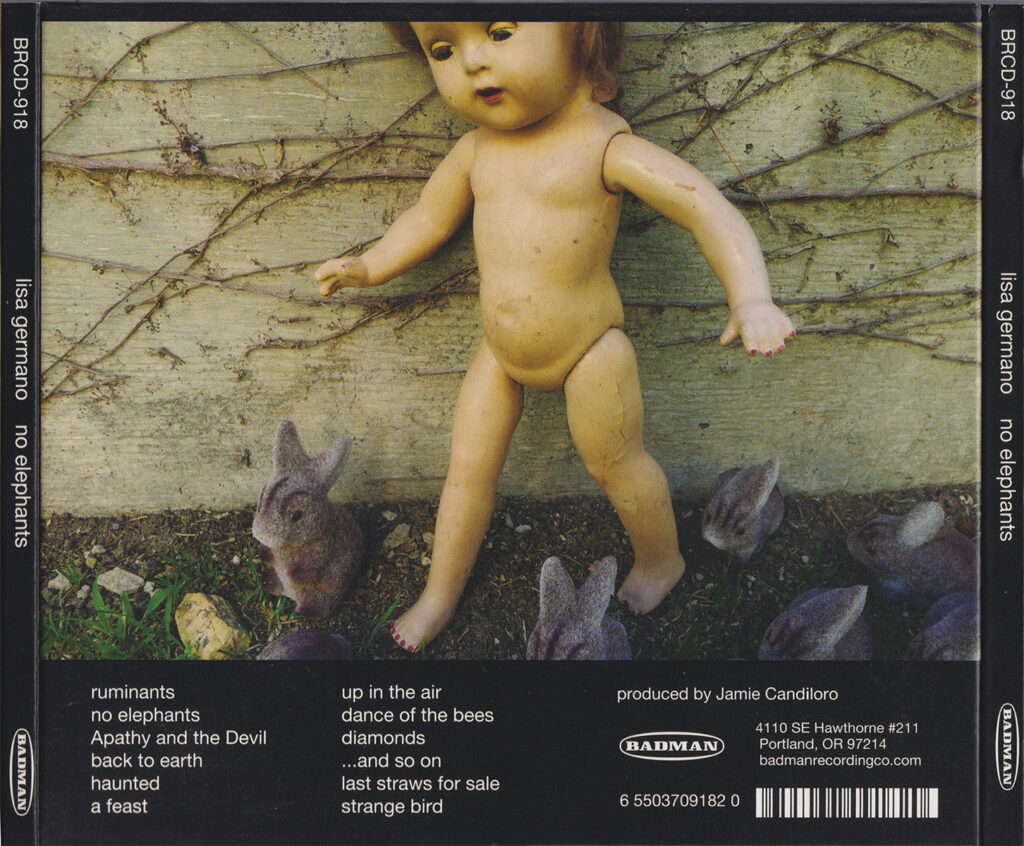

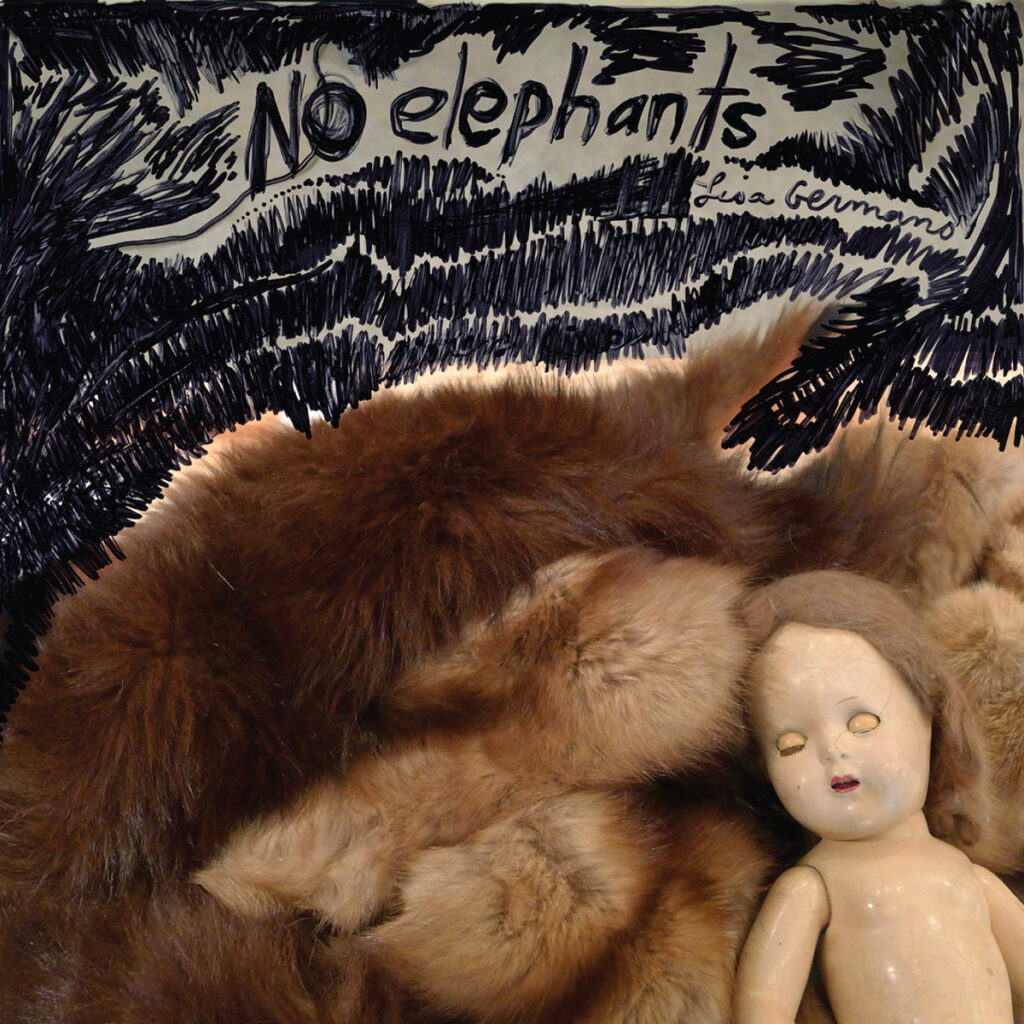
The cover image depicts a doll lying unconscious on fur, eyes closed—comfortable and unaware of the suffering the material represents. Germano initially resisted using the image because of the fur, but Waronker persuaded her that the contrast was precisely the point: the doll’s comfort is built on cruelty she cannot see. On the back cover, the doll’s eyes are open—she’s awake. Inside the packaging, vintage toy animals stare directly at the viewer with an almost accusatory gaze.
The physical release came as a digipak on CD.
Personnel
All songs written and performed by Lisa Germano (and some bees, cell phones, and a bunch of animals)
Jamie Candiloro: Drum loops and unearthly sounds
Sebastian Steinberg: Acoustic bass
Produced, recorded and mixed by Jamie Candiloro at Banana Chicken Studios.
Mastered at Marcussen Mastering by Stephen Marcussen
All songs written by Lisa Germano
Artwork and photography by Lizzy Waronker
Executive produced by Betty and Rocco Germano
Published by Emotional Wench Music
Press Release
We are excited to release a new album from seminal artist Lisa Germano. Lisa is known to a worldwide fan cult for a series of savagely honest and musically intrepid solo albums that commenced in the early ’90s for the 4AD label, including the cynical debut Happiness in 1994 and the sexual-warfare-running-amok Geek the Girl, also from ’94 (which was included in Spin’s top 100 records of the 1990s).
Also known as a multi-instrumentalist with such diverse artists as Eels, David Bowie, Crowded House, Philip Selway (Radiohead), Indigo Girls, John Mellencamp and Giant Sand.
Like her other nine albums, no elephants is made like a book to read to the end. There is foreshadowing from melodies and ideas that weave the record’s story together, and it takes time and imagination from the reader/listener. Few people these days take the time to make or listen to an album created as a whole piece, but no elephants is short and worthy of the attention paid. “Making a record any other way doesn’t work for me,” she says.
BadMan Recordings
Critical Reception
No Elephants received generally favorable reviews, earning a Metacritic score of 68 based on eight critic reviews. Dusted Magazine praised it as a gorgeous album that bites through its own beauty. Beats Per Minute called it a record that finds Germano digging back into her dream pop roots with luxuriant melodies and delicate instrumentation. Something Else! described it as a deeply personal statement made in a way that anyone could relate to, noting the cobwebbed gothic quality that runs through the material. PopMatters observed that the album’s empty spaces bring out remarkable subtleties, though they found it could waver between deeply intimate and uncomfortably oppressive. Blurt Magazine characterized the record as a series of half-drawn soundscapes in which Germano retreats into a world of atmosphere and disconnect. The album appeared on Brainwashed’s 2013 Readers Poll as an overlooked staff pick, and it holds a 4.32 average rating on Discogs.
Several critics observed that the album works best experienced as a complete piece rather than as individual tracks—precisely as Germano intended. The record’s uncompromising commitment to its own spare, insular vision was both its greatest strength and, for some listeners, its greatest challenge.
Tour
Germano toured in support of No Elephants through 2013, including dates across the United States and Europe, with shows in cities including Copenhagen, Ghent, Rome, Milan, and Berlin. She performed solo, accompanying herself on piano—a stripped-down presentation that matched the intimacy of the record. As she put it at the time: no phones or computers onstage, though probably everyone in the audience would have one on during the show.
Related Press

Elephant Talk: Lisa Germano

Lisa Germano: Interview

Lisa Germano: No Elephants
Related Releases