



In 1992, John Mellencamp made his debut as a film director with Falling From Grace, a small-scale Indiana drama written by acclaimed novelist Larry McMurtry and starring Mellencamp alongside Mariel Hemingway and Kay Lenz. As part of that project, Mellencamp assembled an original soundtrack reflecting the film’s heartland folk-country sensibility, drawing on artists from across the singer-songwriter spectrum. For the album’s opening and closing bookends, he turned to his own band: Lisa Germano, who had served as Mellencamp’s violinist since the Scarecrow tour of 1985, contributed two original instrumental compositions—”Bud’s Theme” and “Little Children”—marking one of her earliest recognized moments as a solo composer in a public context.
By the time the soundtrack was released in February 1992, Germano had just issued her debut solo album, On the Way Down From the Moon Palace, the year prior. Her presence on Falling From Grace captures her at a hinge point: still embedded in the Mellencamp orbit, but beginning to step forward as a songwriter in her own right.
Background
Falling From Grace originated from a screenplay Mellencamp had been developing throughout the late 1980s, initially under the title Ridin’ the Cage. Inspired by films he admired—particularly Hud and The Last Picture Show—he envisioned a gritty, intimate story about small-town Midwesterners navigating the weight of their own limitations. After early interest from Warner Bros. Pictures prompted a rewrite, Mellencamp brought in Larry McMurtry—who had written the novel that became The Last Picture Show and would later pen Lonesome Dove—to refine and reshape the screenplay. McMurtry transformed the protagonist into Bud Parks, a country music star who returns to his fictional Indiana hometown of Doak City for his grandfather’s 80th birthday, only to find himself drawn back into old patterns, an old flame, and the slow unraveling of his marriage.
Filming took place primarily in Seymour, Indiana, Mellencamp’s own hometown, between July and September 1990. The production was a collaboration between Columbia Pictures and Mercury Records, with Sony Pictures handling distribution. The film premiered on February 18, 1992 in Century City, California, followed by a hometown screening in Seymour, before entering limited release on February 21 across just 22 theaters. Columbia’s minimal marketing support, compounded by the film’s niche appeal, contributed to a modest box office run. Still, the film earned respectful notices from critics, with Rolling Stone‘s Peter Travers calling it as “sexy, comic, sad and precise as a Mellencamp song.”
Mellencamp oversaw the soundtrack with characteristic control, producing all 13 tracks alongside longtime collaborator and guitarist Mike Wanchic. Rather than filling the album with arena-rock, he curated an ensemble of singer-songwriter voices rooted in American folk and country tradition: Nanci Griffith, John Prine, Dwight Yoakam, Janis Ian, and Larry Crane (a former Mellencamp guitarist who contributed the bulk of the album’s songwriting). Germano was among the handful of contributors who wrote their own material specifically for the project.
Themes
The film’s emotional terrain of returning home to find it smaller and stranger than memory, the impossibility of escaping who you were, the quiet violence of family, runs as a subterranean current through the album’s music. The songs gathered here don’t dramatize the film’s plot so much as inhabit its atmosphere: world-weary voices, aching fiddles, plain truths delivered without ornament.
Germano’s two instrumental contributions, “Bud’s Theme” and “Little Children,” operate in the space between background scoring and stand-alone composition. “Bud’s Theme,” which opens the album, establishes a tone of wistful restraint—quiet and unhurried, it functions as a kind of character portrait, lending the fictional Bud Parks a melancholy interiority before a single sung note is heard. “Little Children,” which is near the closing of the album at nearly five minutes, is more expansive in its emotional register, an elegy of sorts that gives the collection a ruminative, unresolved ending befitting McMurtry’s rueful vision of American life.
Both tracks are wholly instrumental, notable at a moment when Germano’s identity as a solo artist was still taking shape. They show a composer working in miniature, economical, atmospheric, and emotionally precise, traits that would define her solo work throughout the decade.
Released: 1992
Label: Mercury
Catalog No: 314 512 004-2
Format: CD, LP, Cassette
Country: US, Germany
Availability: Moderate
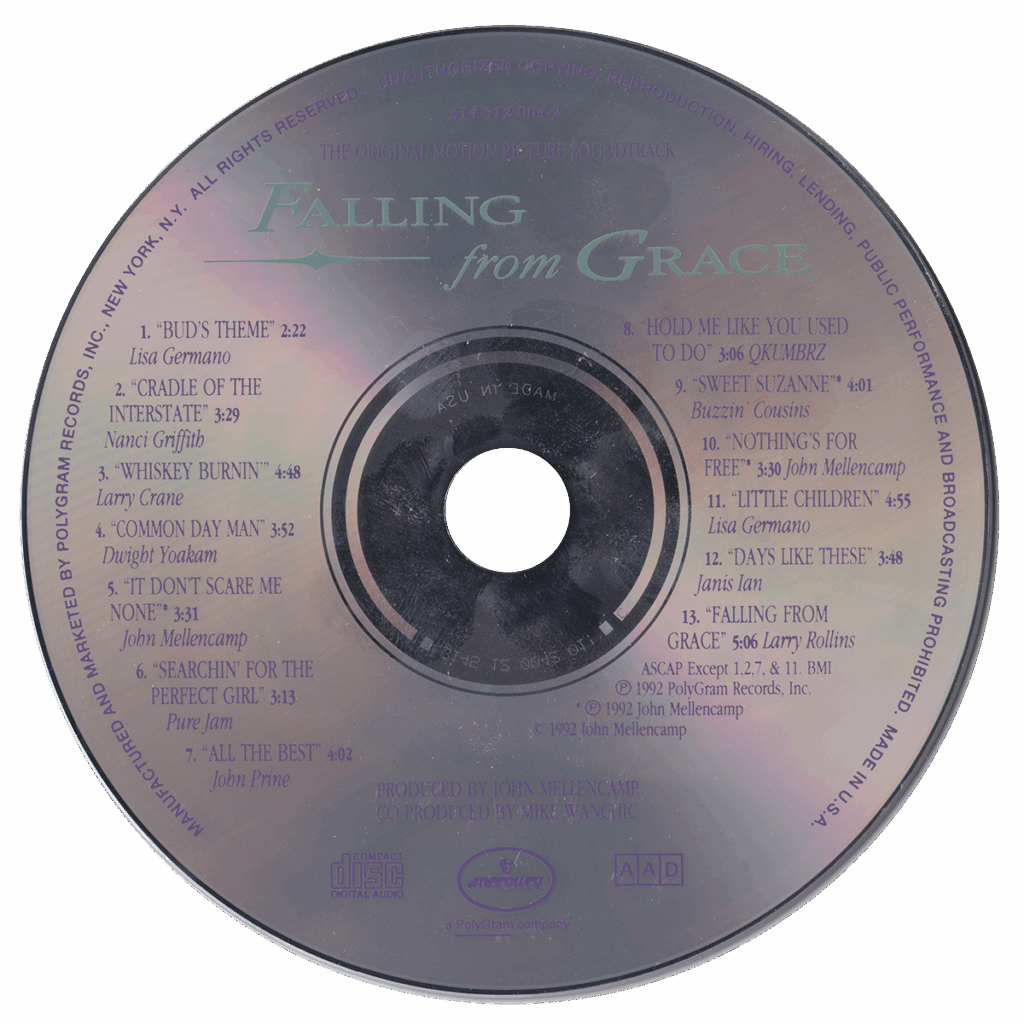
| No. | Artist | Title | Length |
|---|---|---|---|
| 1 | Lisa Germano | Bud’s Theme | 2:22 |
| 2 | Nanci Griffith | Still Flat | 3:29 |
| 3 | Larry Crane | Whiskey Burnin’ | 4:48 |
| 4 | Dwight Yoakam | Common Day Man | 3:52 |
| 5 | John Mellencamp | It Don’t Scare Me None | 3:31 |
| 6 | Pure Jam | Searchin’ For the Perfect Girl | 3:13 |
| 7 | John Prine | All the Best | 4:02 |
| 8 | Qkumbrz | Hold Me Like You Used To | 3:06 |
| 9 | Buzzin’ Cousins | Sweet Suzanne | 4:01 |
| 10 | John Mellencamp | Nothing’s for Free | 3:30 |
| 11 | Lisa Germano | Little Children | 4:55 |
| 12 | Janis Ian | Days Like These | 3:48 |
| 13 | Larry Rollins | Falling From Grace | 5:06 |
The entire soundtrack was recorded and mixed at Belmont Mall Studio in Belmont, Indiana, Mellencamp’s home recording facility. Engineering was handled by Jay Healy, who also co-mixed the album alongside Mike Wanchic and Mellencamp. Mark Hood served as additional engineer on “Whiskey Burnin'” and, notably, “Little Children”—the latter credit placing him among the few people present for the recording of Germano’s contribution. The finished masters were handled by Bob Ludwig at Masterdisk.
The soundtrack was released on Mercury Records on February 18, 1992, the same day as the film’s premiere. Formats included CD, LP, and cassette, available in both the US and Europe.
Packaging & Design
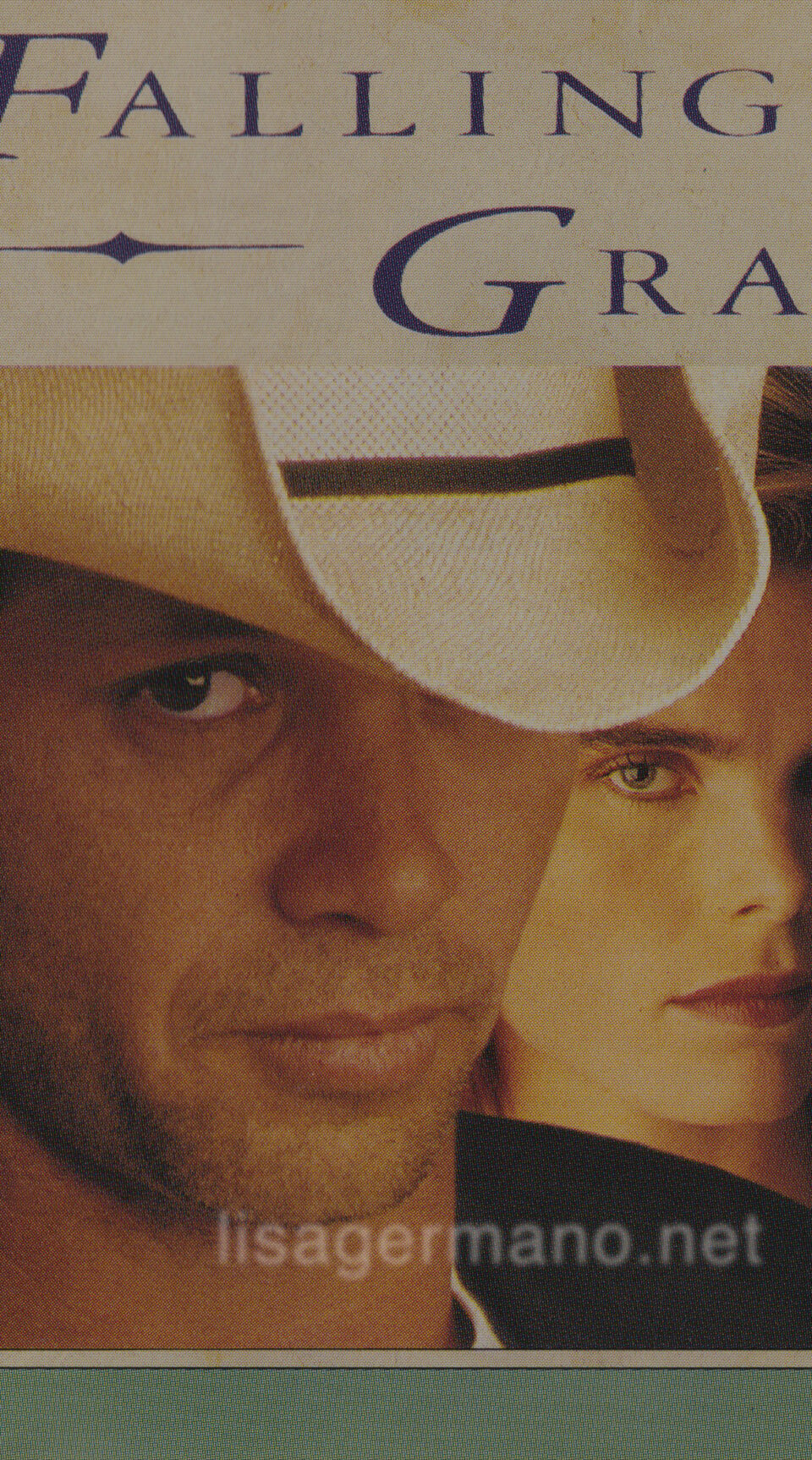
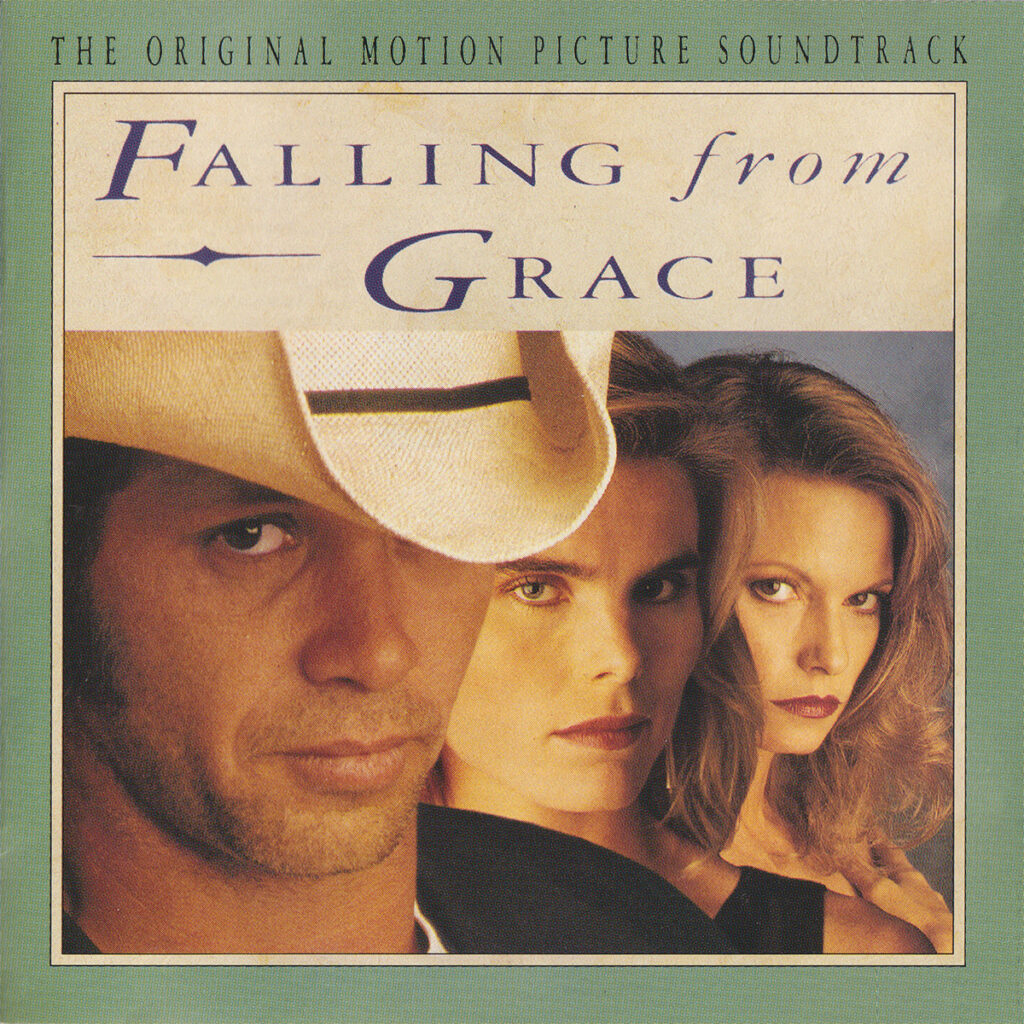
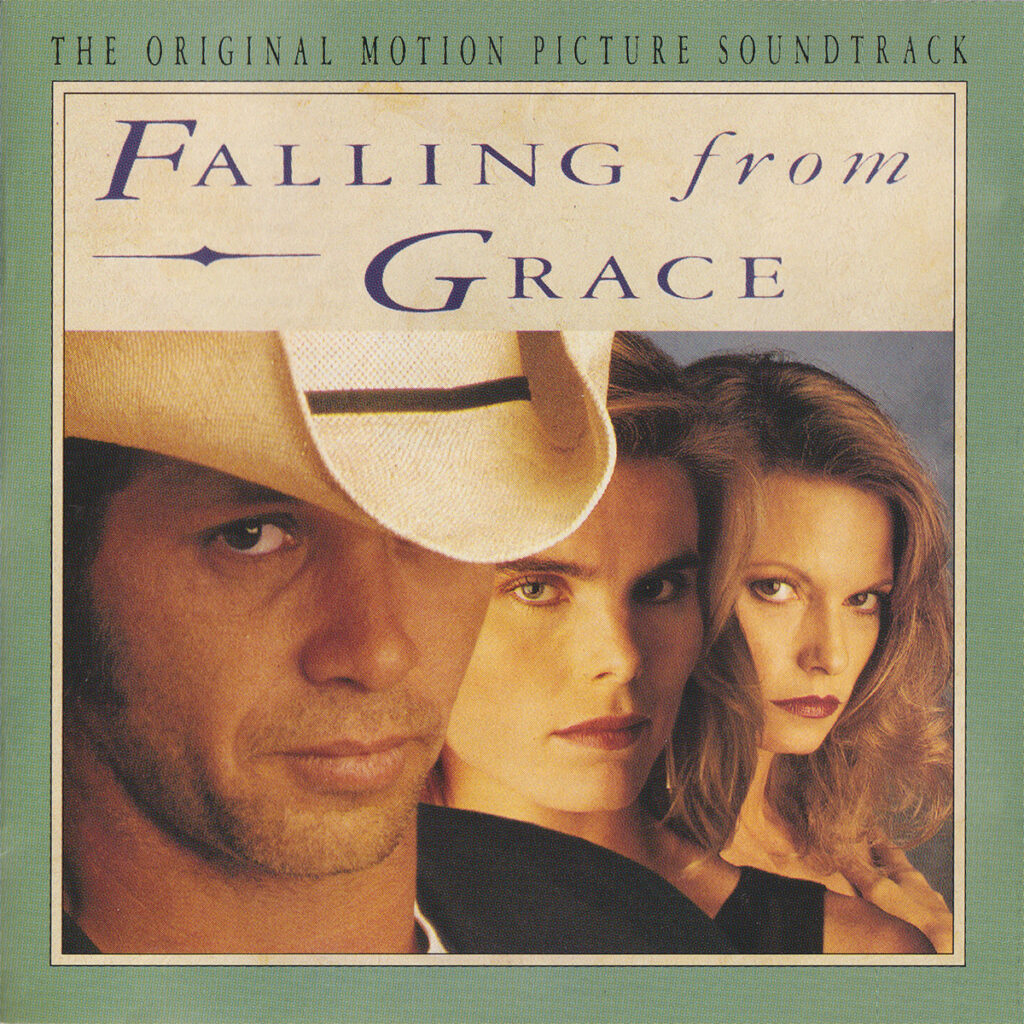
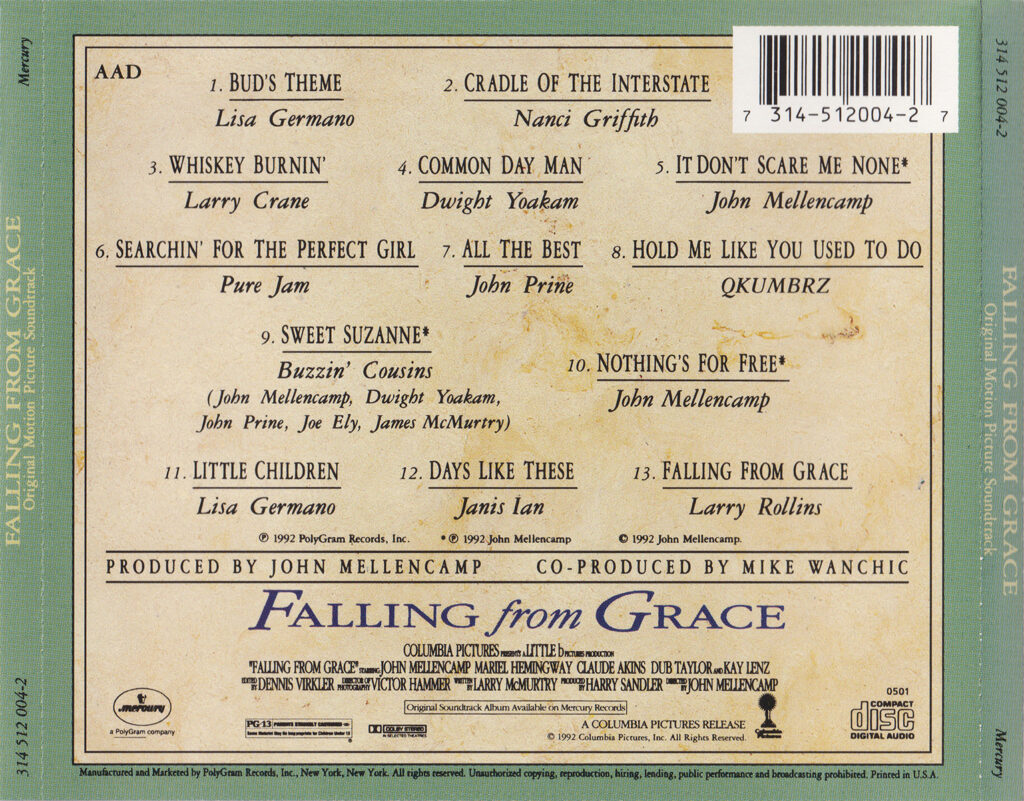
The album’s visual identity was handled by the design firm Corsilo/Mazone, with photography credited to Wayne Maser and Marc Hauser. The cover imagery reflects the film’s dusty, rural Indiana setting, presenting the project as a cohesive artistic statement rather than a standard film tie-in. The back cover layout mirrors the understated aesthetic of the album’s music.
Personnel
“Bud’s Theme” and “Little Children” written by Lisa Germano
Compilation produced by John Mellencamp
Co-produced by Mike Wanchic
Engineered by Jay Healy
Mixed by Jay Healy, Mike Wanchic, and John Mellencamp
Additional Engineering on “Whiskey Burnin'” and “Little Children” by Mark Hood
Recorded and mixed at Belmont Mall Studio, Belmont, Indiana Mastered by Bob Ludwig at Masterdisk
Design by Corsilo/Mazone
Photography by Wayne Maser and Marc Hauser
Phonographic copyright: PolyGram Records, Inc. / John Mellencamp
Manufactured and marketed by PolyGram Records, Inc.
Critical Reception
Contemporary critics received the Falling From Grace soundtrack warmly, and in several cases, more warmly than the film itself. Reviewers consistently noted the internal coherence of Mellencamp’s curatorial vision, and Germano’s contributions were specifically cited as evidence of compositional range beyond her established role as a fiddle player.
The irony is that one of the year’s best soundtracks comes from an “unsuccessful” movie, “Falling From Grace,” directed by and starring musician John Mellencamp. Translation: The soundtrack will likely die an obscure death, denied the opportunity to grace the radio airwaves.It’s unfortunate, too, because the soundtrack for “Falling From Grace” (on Mercury) is a brilliant collection of original folk-rock (add in an overlay of country, too) tunes that reflects everything good about the much-maligned concept of “singer-songwriter.”
Jerry Spangler
Deseret News
Mellencamp had arguably more fun putting together the film’s soundtrack, a 13-song set that included songs by Prine, Crane, Dwight Yoakam, the late folk singer Nanci Griffith and Janis Ian, along with instrumentals by Mellencamp band violinist Lisa Germano. Mellencamp sang two Crane-written songs, “It Don’t Scare Me None” and “Nothing’s For Free.” He also wrote “Sweet Suzanne,” which he recorded with the ad hoc band Buzzin’ Cousins featuring Prine, Yoakam, Joe Ely and McMurtry’s son James, whose 1989 debut Too Long in the Wasteland had been produced by Mellencamp.
Gary Graff
Ultimate Classic Rock & Culture
Related Releases